

Florida Online Graphic Design Colleges: Complete State-by-State Guide
Table of Contents
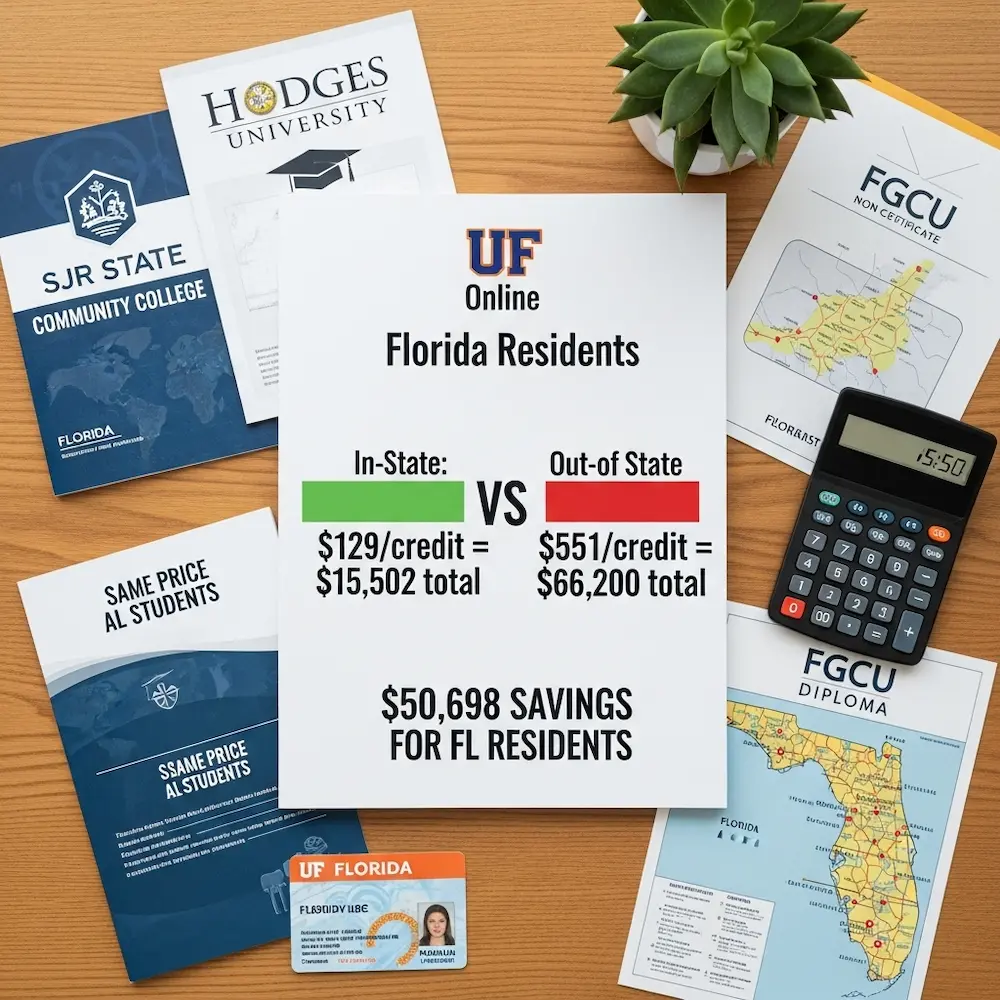
The admissions counselor’s question caught me off guard. “Have you considered in-state online programs?” I was applying to online graphic design colleges—why would my physical location matter when all coursework happened through screens? She explained what I hadn’t realized: even for fully online programs, state residency dramatically affects tuition rates, many states maintain robust transfer agreements between community colleges and state universities, regional accreditation can impact professional licensing in certain fields, and schools often maintain stronger job placement connections in their geographic regions. As a Florida resident, I could attend University of Florida Online’s Digital Arts program at in-state tuition ($129.18 per credit) versus out-of-state rates ($551.67 per credit)—a difference of over $50,000 for a complete bachelor’s degree. That single factor made UF Online financially feasible when out-of-state alternatives weren’t. Beyond cost, Florida schools understood the state’s design job market—Miami’s advertising agencies, Orlando’s theme park design studios, Tampa’s corporate marketing departments—and maintained relationships with these employers. Understanding online graphic design colleges by state helps students identify programs offering in-state tuition advantages, regional job market connections, and transfer pathways specific to state higher education systems.
Geographic considerations for online education might seem paradoxical—if programs deliver entirely digitally, why does location matter?—but practical realities create significant state-specific advantages. Public universities almost always charge lower tuition for state residents even in online programs. State community college systems maintain transfer agreements guaranteeing admission to public universities for associate degree graduates meeting requirements. Regional accreditation sometimes affects professional licensure or graduate school admission in specific states. And perhaps most significantly, schools maintain stronger employment pipelines to regional employers—a North Carolina school’s career services office has deeper connections to Research Triangle design firms than a California school would. As explored in our comprehensive directory of online graphic design colleges, the national landscape provides abundant options, but state-specific programs often deliver superior value for residents through financial advantages, streamlined transfer pathways, and regional employment connections.
This detailed state-by-state guide explores online graphic design colleges across major regions, covering Florida’s extensive university and community college options serving the state’s diverse creative economy, Texas programs ranging from community colleges to prestigious universities in major metro markets, North Carolina’s strong community college system and university offerings in the Research Triangle region, Midwest options in Minnesota, Iowa, and Wisconsin serving regional design markets, California’s robust community college transfer system and university programs, and Southern programs in South Carolina and beyond. Whether seeking in-state tuition savings, regional job market positioning, or understanding transfer options within your state system, this guide illuminates geographic advantages often overlooked in online program searches.
Florida Online Graphic Design Colleges: Comprehensive State Coverage
Florida’s extensive higher education system provides diverse online graphic design options from community colleges through research universities.
University of Florida Online (UF Online)
Premier public university option: UF Online offers a Bachelor of Arts in Digital Arts and Sciences providing “careers in design, animation, and digital media”. As Florida’s flagship research university, UF brings institutional prestige to online offerings.
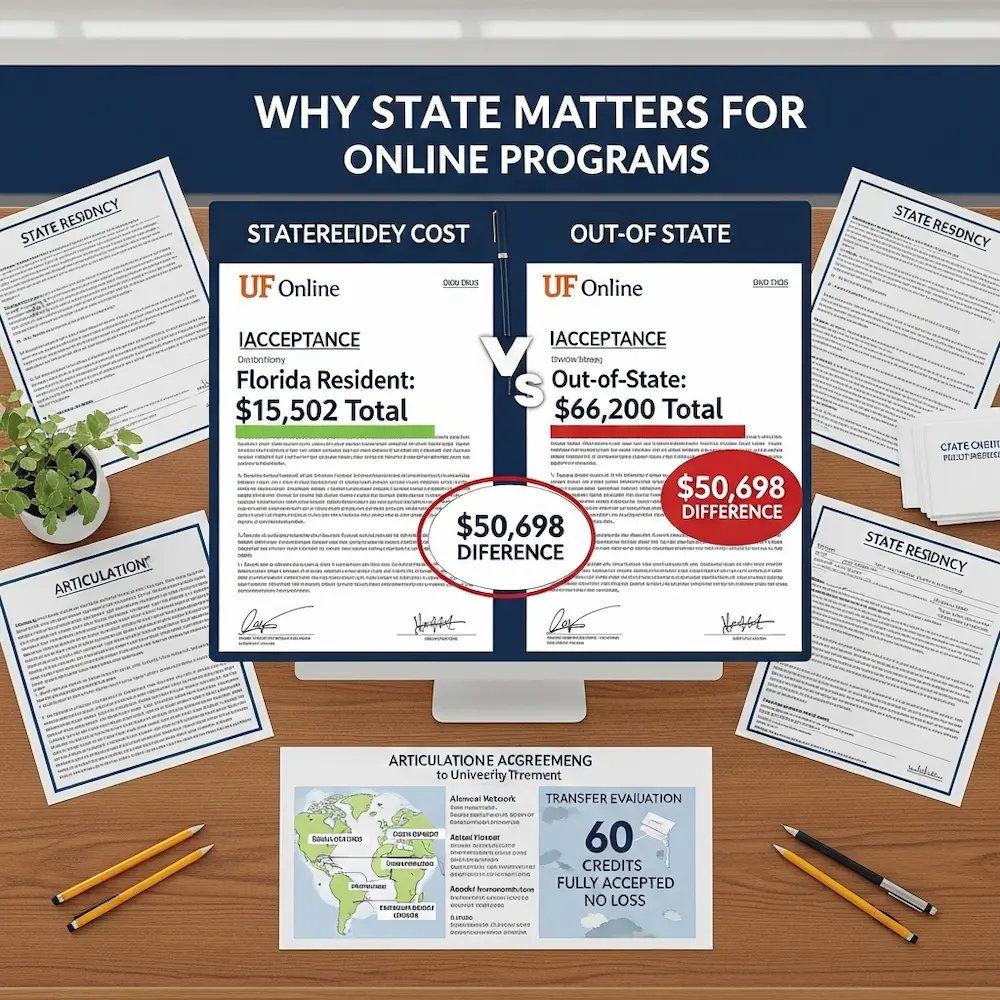
In-state tuition advantage: The dramatic cost difference makes UF Online financially transformative for Florida residents. Out-of-state students pay $551.67 per credit; Florida residents pay just $129.18 per credit. For a 120-credit degree, this means:
- In-state total: $15,502
- Out-of-state total: $66,200
- Savings for FL residents: $50,698
This $50,000+ difference dwarfs most scholarship opportunities.
Curriculum structure: The program requires coursework spanning computer science/programming (COP, CAP, or CGS prefixes), visual design and studio art (ART prefix courses like Design I, Design II, Drawing I), and specialized digital arts coursework. This interdisciplinary approach combines technical and creative skills.
Hybrid learning model: UF’s Digital Worlds Institute uses “multi-stream video-conferencing technology” creating “state-of-the-art classrooms” that “immerse online students in a traditional teaching setting”. Their “hybrid approach to learning — where online students are integrated into campus environments promoting project-based active learning” distinguishes UF from purely asynchronous programs.
Hodges University
Private university flexibility: Hodges University’s “Digital Design and Graphics program readies successful students with the skills they need to start working in Graphic Design starting on day one!”. As a private institution, Hodges charges the same tuition regardless of residency, appealing to out-of-state students or those seeking alternatives to public universities.
Career-focused approach: The program emphasizes immediate employability with practical skills training. This career-first orientation suits students prioritizing quick job market entry over theoretical depth.
St. Johns River State College (SJR State)
Community college associate degree: SJR State’s Graphic Design/New Media specialization provides an Associate in Science degree “encompass[ing] the use of new technologies in the making of art”. As a community college, SJR State offers the cheapest online college for graphic design education in Florida.
In-person requirement: Courses are “taught on the Palatka Campus, Florida School of the Arts”. This in-person requirement limits purely online accessibility but provides studio facilities and equipment. Students seeking fully online Florida community college options should explore other institutions within the Florida College System.
Transfer pathway: The AS degree positions graduates for transfer to Florida public universities completing bachelor’s degrees. Florida’s statewide articulation agreement facilitates smooth transfers.
Florida Gulf Coast University Career Training
Non-credit professional certificates: FGCU offers various graphic design certificates including “Graphic Design with Photoshop,” “Digital Arts Certificate,” “Adobe Certified Professional” programs covering Photoshop, Illustrator, InDesign, Premiere Pro, and more. These non-credit programs provide focused skill development without degree commitments.
Software-focused training: Courses emphasize Adobe Creative Suite mastery with “hands-on projects for real-world expertise” and “certification readiness”. This approach suits working professionals adding specific skills.
Florida Southern College
Traditional campus program: While Florida Southern offers comprehensive graphic design blending “rigorous studio practice with the foundational principles of a liberal arts education”, their program appears primarily campus-based. However, their existence demonstrates Florida’s strong design education infrastructure.
Florida Technical College (FTC)
Diploma program: FTC’s Graphic Design diploma “will prepare students with the competencies required for planning, analyzing, and creating effective visual communication”. This shorter credential provides entry-level preparation.
Texas Online College for Graphic Design Options
Texas’s massive higher education system and major metro design markets create diverse program options.
Texas Christian University (TCU)
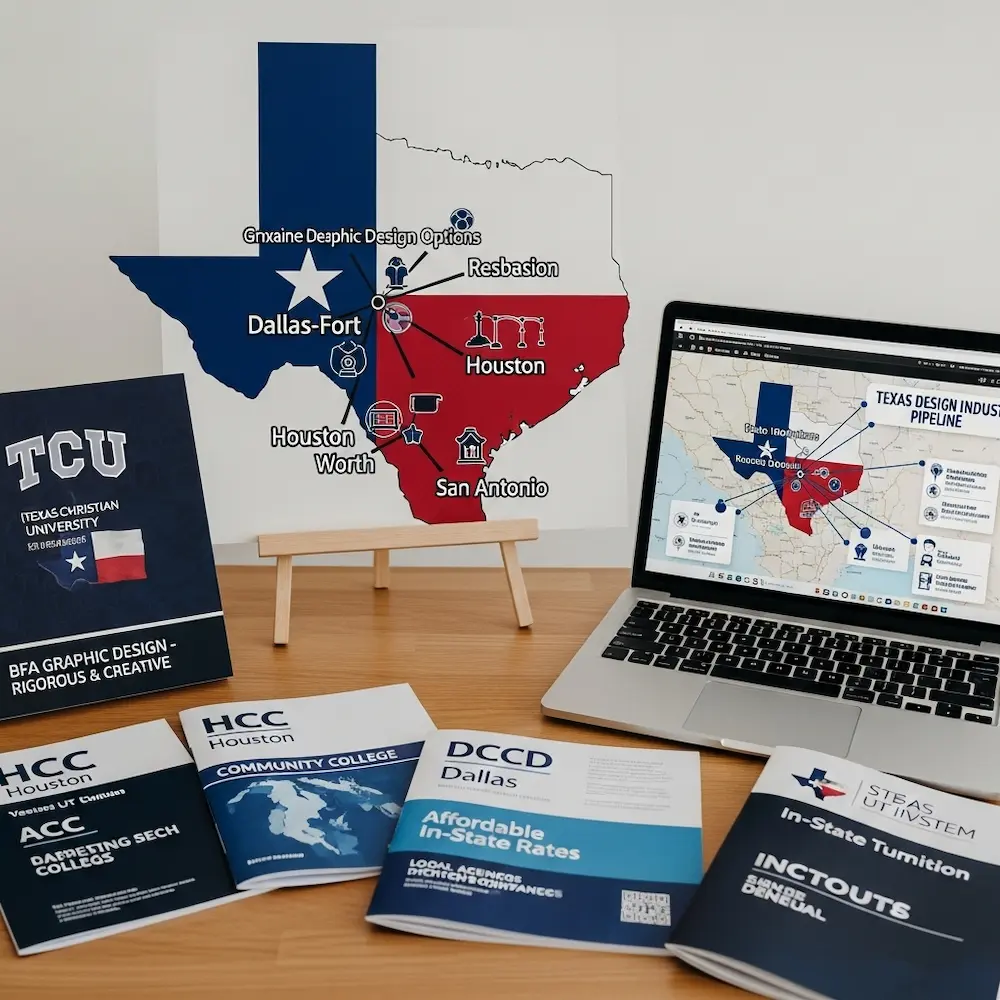
Bachelor of Fine Arts program: TCU describes their graphic design program as “rigorous, competitive and intensely creative” challenging students to “push beyond your comfort zone to learn, grow and improve”. Sample courses include Illustration, Publication Design, Package Design, Corporate Identity, and Portfolio and Marketing.
Traditional campus format: TCU’s program appears primarily campus-based in Fort Worth. However, as a Texas institution, TCU demonstrates the state’s commitment to quality design education.
Texas Community Colleges and State Universities
Houston Community College, Austin Community College, Dallas County Community College District, and other Texas community colleges likely offer graphic design coursework, though specific online program availability varies by institution. Students should contact individual colleges about online options.
Texas State University System and University of Texas System schools may offer online graphic design or related programs. The sheer size of Texas higher education creates numerous options for residents.
Regional Market Connections
Dallas-Fort Worth, Houston, Austin, and San Antonio all have significant design industry presence. Texas schools maintain employment pipelines to these markets, advantaging students seeking to work in-state after graduation. Our pillar directory of online graphic design colleges discusses how regional connections enhance career outcomes.
North Carolina: Research Triangle Design Education
North Carolina’s strong community college system and university programs serve the state’s growing design industry.
Guilford Technical Community College (GTCC)
Well-regarded program: GTCC’s graphic design program is described as “a highly successful, well-regarded technical degree program dedicated to teaching you how to create effective and engaging” design work. Community college programs like GTCC provide affordable entry into design education.
Technical degree focus: As a technical degree, GTCC emphasizes practical skills and workforce readiness. This aligns with community college missions of preparing students for immediate employment.
Greensboro Area Training Options
American Graphics Institute offers “Graphic Design training in Greensboro” through “live Graphic Design classes led by instructors with extensive experience”. While AGI provides professional development rather than degrees, their presence indicates Greensboro’s design education infrastructure.
Live online and in-person options: AGI offers both “live online Graphic Design courses” and connections to “state university system and Greensboro area community colleges” for “in-person Graphic Design training”. This hybrid availability serves diverse student needs.
North Carolina State Universities
University of North Carolina system schools and North Carolina State University likely offer design-related programs, though specific online graphic design program availability requires individual research. North Carolina’s strong university system and Research Triangle tech sector create robust design education demand.
Regional Employment Context
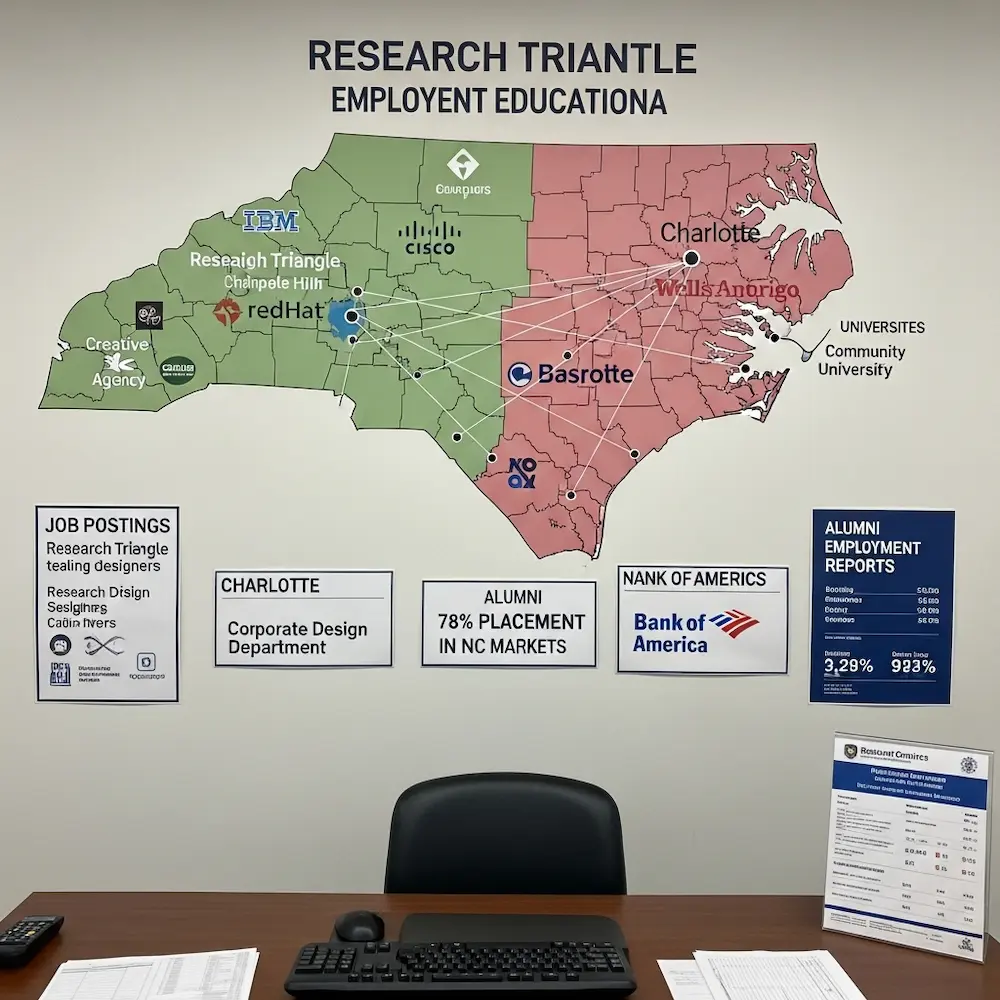
Raleigh-Durham-Chapel Hill (Research Triangle) hosts major tech employers, startups, and creative agencies. Charlotte’s banking and corporate sectors need design talent. North Carolina schools understand these markets and maintain employment connections.
Midwest Regional Programs
Minnesota, Iowa, Wisconsin, and other Midwest states offer regional programs serving their design markets.
Minnesota Graphic Design Colleges
Minnesota State Colleges and Universities (MnSCU) system and University of Minnesota likely provide online graphic design options. Minnesota’s Twin Cities metro (Minneapolis-St. Paul) has significant corporate design, advertising, and creative agency presence requiring trained designers.
Affordability for residents: Minnesota public institutions offer in-state tuition advantages similar to other states. Residents should prioritize Minnesota schools for cost savings.
Iowa Online College Courses for Graphic Design
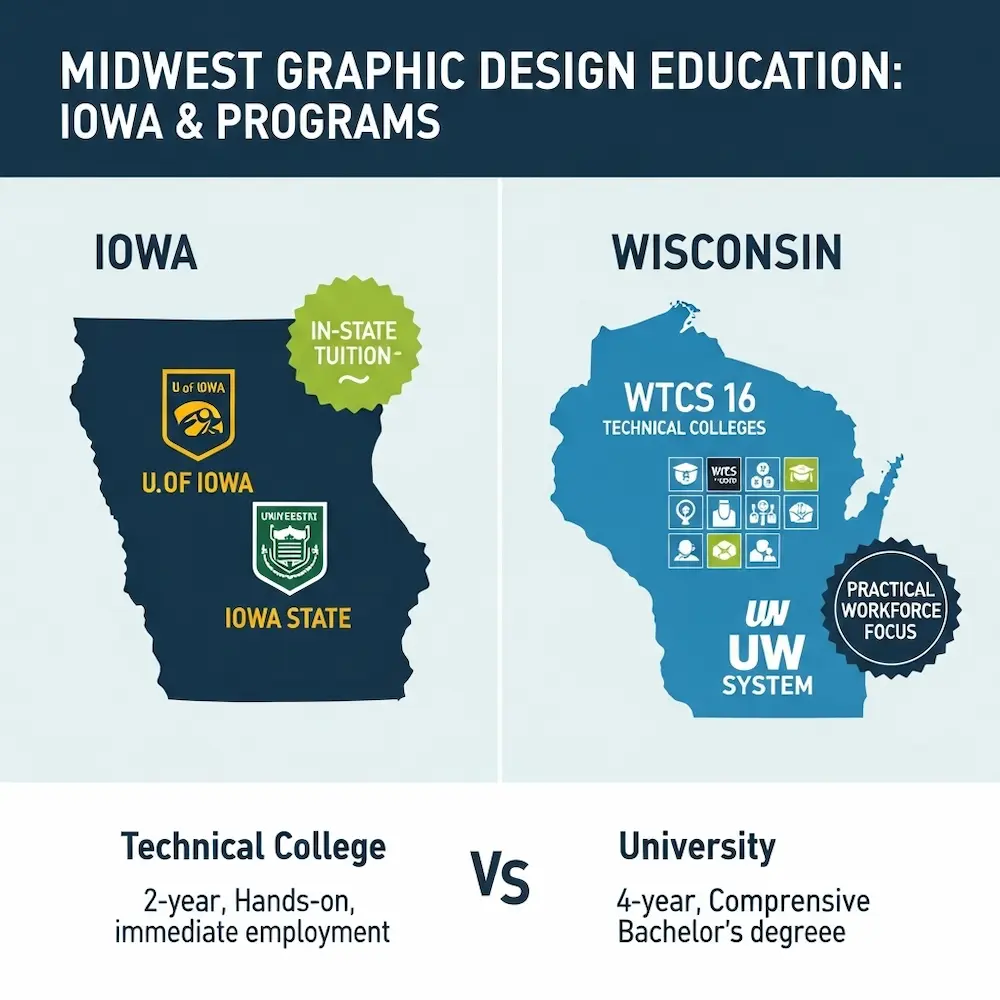
Iowa community colleges including Kirkwood Community College, Des Moines Area Community College, and Iowa Western Community College may offer online graphic design coursework. Iowa’s community college system emphasizes workforce development.
University of Iowa and Iowa State University represent potential four-year options. Iowa residents benefit from in-state tuition at these institutions.
Wisconsin Technical College Graphic Design
Wisconsin Technical College System (WTCS) includes 16 technical colleges potentially offering graphic design programs. Technical colleges emphasize practical skills and workforce preparation.
University of Wisconsin System schools may provide online graphic design or related programs. Wisconsin’s strong public higher education system serves residents affordably.
California: Transfer Pathways and University Options
California’s extensive community college system and university programs create well-established transfer pathways.
California Community College Transfer System
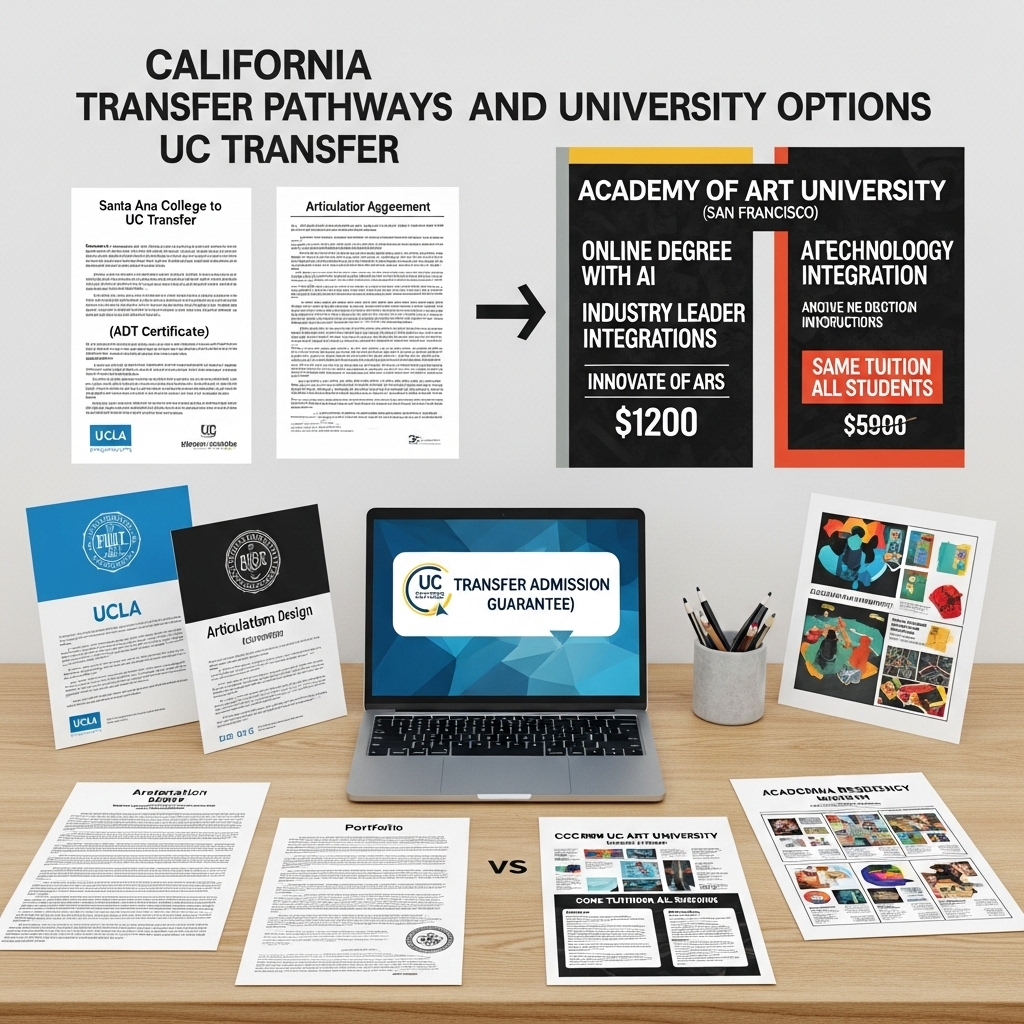
Associate Degree for Transfer (ADT): California’s community colleges offer Associate in Arts for Transfer (AA-T) degrees guaranteeing admission to California State University system for students meeting requirements. This structured pathway enables affordable bachelor’s degree completion.
Santa Ana College, Moorpark College, Saddleback College, and other California community colleges provide graphic design coursework building toward transfer. Our article on online graphic design community college explores California programs extensively.
California State University (CSU) System
23 CSU campuses potentially accept transfers from community colleges with AA-T degrees. Specific campuses with graphic design or related programs become transfer destinations.
University of California (UC) System
UC schools including UCLA, UC Berkeley, and others represent elite public university options. Transfer from California community colleges to UC schools follows established pathways.
Private Universities
Academy of Art University in San Francisco offers comprehensive “online graphic design degree” programs “taught by industry leaders”. The Academy blends “the latest in AI technology” with design education. As a private institution, Academy of Art charges the same tuition regardless of residency.
South Carolina and Additional Southern States
South Carolina and other Southern states provide regional options.
South Carolina Colleges with Online Graphic Design
South Carolina community colleges and state universities may offer online graphic design programs serving residents. Specific program availability requires individual institution research.
Coastal Carolina University, College of Charleston, and University of South Carolina represent potential options. South Carolina residents should prioritize in-state institutions for tuition advantages.
Why State Matters for Online Programs
Geographic considerations create real advantages even for distance learning.
Tuition Differential Impact
In-state vs. out-of-state tuition: Public universities typically charge dramatically different rates. UF Online’s $50,000+ difference for Florida residents versus non-residents exemplifies this impact. Even smaller differentials of $10,000-$20,000 significantly affect affordability.
Community college savings: State community colleges offer even more dramatic savings. Completing an associate degree in-state before transferring maximizes affordability.
Transfer Agreement Benefits
Guaranteed admission: Many state systems guarantee community college graduates admission to public universities meeting requirements. This removes application uncertainty.
Streamlined credit transfer: Articulation agreements ensure credits transfer fully without loss. Students avoid retaking courses or losing progress.
Regional Employment Connections
Local employer relationships: Schools maintain career services connections to regional employers. A North Carolina school has stronger Research Triangle relationships than distant alternatives.
Alumni networks: Regional alumni networks provide job leads and professional connections in local markets. Graduates staying in-state after graduation benefit from these networks.
Practical Considerations
Residency verification: Establishing residency often requires 12 months of physical presence in the state before qualifying for in-state tuition. Students should verify specific residency requirements.
Hybrid program access: Some “online” programs include occasional on-campus requirements or optional campus visits. Geographic proximity makes these opportunities accessible.
Conclusion
Understanding online graphic design colleges by state transforms program searches from overwhelming national landscapes into focused regional explorations maximizing advantages. From Florida’s extensive options including University of Florida Online’s dramatic in-state tuition savings, Hodges University’s private flexibility, and community college pathways through institutions like SJR State, to Texas programs serving major metro design markets in Dallas, Houston, and Austin, to North Carolina’s Research Triangle-connected programs at institutions like GTCC, to Midwest regional options in Minnesota, Iowa, and Wisconsin, to California’s well-established community college transfer pathways—state-specific programs often deliver superior value through financial advantages, transfer guarantees, and regional employment connections. My initial confusion about why geography mattered for online education dissolved once I understood the $50,000 tuition difference between in-state and out-of-state UF Online rates—that single factor made quality design education financially possible.
The comprehensive state-by-state analysis here—examining specific institutions in Florida, Texas, North Carolina, Midwest states, California, and South Carolina, explaining in-state tuition advantages, detailing transfer pathways, and highlighting regional employment connections—provides framework for geographic program evaluation. For context on how state programs fit within the broader online graphic design education landscape, explore our pillar directory of online graphic design colleges comparing all program types nationally. For students also considering prestigious institutions regardless of location, our article on top online colleges for graphic design degrees examines elite programs like SCAD and Rocky Mountain College. And for those prioritizing affordability through community college pathways, our guide to online graphic design community college details certificate programs, associate degrees, and transfer strategies applicable across states. Together, these resources enable informed decisions balancing geographic advantages with program quality, cost, and career goals.


