

The Ultimate Graphic Design Cover Letter Guide
Table of Contents
Many creatives believe that a strong portfolio is the only thing that matters. While your visual work is crucial, the graphic design cover letter is the bridge that connects your art to your professional identity. It is your voice in a room where you are not yet present.
To land your dream job, you must master the art of storytelling. Your portfolio shows what you can do, but your cover letter explains who you are, why you design, and how you can solve specific business problems for the employer.
This guide will walk you through everything you need to know about crafting the best graphic design cover letter, ensuring your application stands out in a crowded market.
Writing a compelling letter requires a mix of creativity and strategy. You are not just listing your skills; you are selling a service. Whether you are looking for graphic design cover letter examples to inspire you, or building one from scratch, the goal remains the same: to prove you are the best fit.
By combining a strong graphic design resume and cover letter, you create a cohesive personal brand that hiring managers cannot ignore.
Define Your Unique Value Proposition
Before you type a single word, you need to understand what makes you unique. In the design world, style is subjective, but value is objective. Start by identifying your core strengths. Are you a minimalist branding expert? A chaotic typography wizard? Or a UI/UX problem solver?
When you clearly define your style and value, you can write a letter that speaks directly to the needs of the employer. This is the foundation of how to write a cover letter for graphic design that actually converts readers into interviewers.
Additionally, you can follow these preparation steps to strengthen your writing strategy:
- Analyze the Job Description 📌 Read the posting three times. Highlight keywords like “collaboration,” “deadline-driven,” or specific software skills. Your letter must mirror this language to pass Applicant Tracking Systems (ATS).
- Audit Your Portfolio 📌 Ensure the projects you mention in your letter are the first things they see in your portfolio. If you talk about a rebranding project, link directly to it. The connection between your graphic design resume and cover letter and your portfolio must be seamless.
- Identify the Reader 📌 “To Whom It May Concern” is a missed opportunity. Research the company on LinkedIn to find the Art Director or Creative Lead. addressing them by name shows initiative.
- Determine Your Angle 📌 Are you the experienced veteran or the hungry newcomer? If you are writing an entry level graphic design cover letter, focus on your potential and willingness to learn. If you are senior, focus on ROI and leadership.
- Gather Metrics 📌 Design is art, but business is numbers. Did your brochure increase sales by 20%? Did your social media graphics double engagement? Find the data to back up your claims.
- Select the Right Format 📌 The way your letter looks matters as much as what it says. You need a clean, professional graphic design cover letter format that matches your resume design.
In short, preparation is half the battle. When you know your target and your ammunition, writing the actual letter becomes a process of assembly rather than a struggle for ideas.
Structure Your Narrative
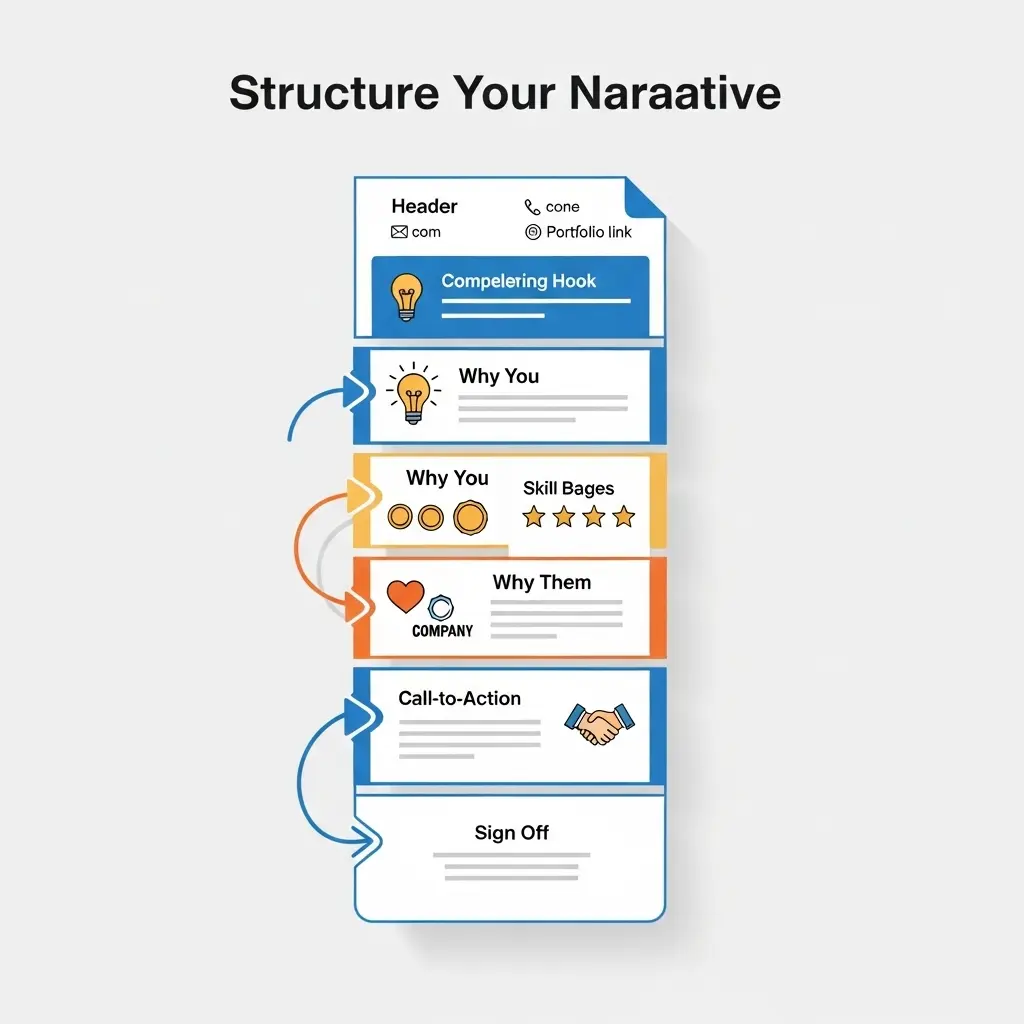
A great cover letter is not a biography; it is a sales pitch. The structure of your letter dictates how easily a hiring manager can digest your information. Here is a breakdown of the essential elements that every graphic designer cover letter should contain.
- The Header 📌 This section must match your resume exactly. Include your name, portfolio URL, LinkedIn profile, email, and phone number. Good design consistency starts here.
- The Hook 📌 The first sentence is the most important. Avoid “I am applying for…” Instead, share a brief story about your connection to the brand or a major achievement.
- The “Why You” 📌 This is the body paragraph where you map your skills to their problems. If you are writing a senior graphic designer cover letter, discuss your experience mentoring junior designers or managing budgets.
- The “Why Them” 📌 Companies want to know you actually like them. Mention a specific campaign they ran that you admired. Explain why their culture fits your working style.
- The Call to Action (CTA) 📌 Don’t just end the letter. Invite them to view your portfolio and suggest a time to chat. Confidence is key in the creative industry.
- The Sign-off 📌 Keep it professional. “Sincerely” or “Best regards” followed by your name. If sending a PDF, consider adding a digital signature for a personal touch.
By following this structured approach, you ensure that you cover all the bases without rambling. It keeps the reader engaged and leads them naturally to the conclusion: hiring you.
Focus on Writing Quality
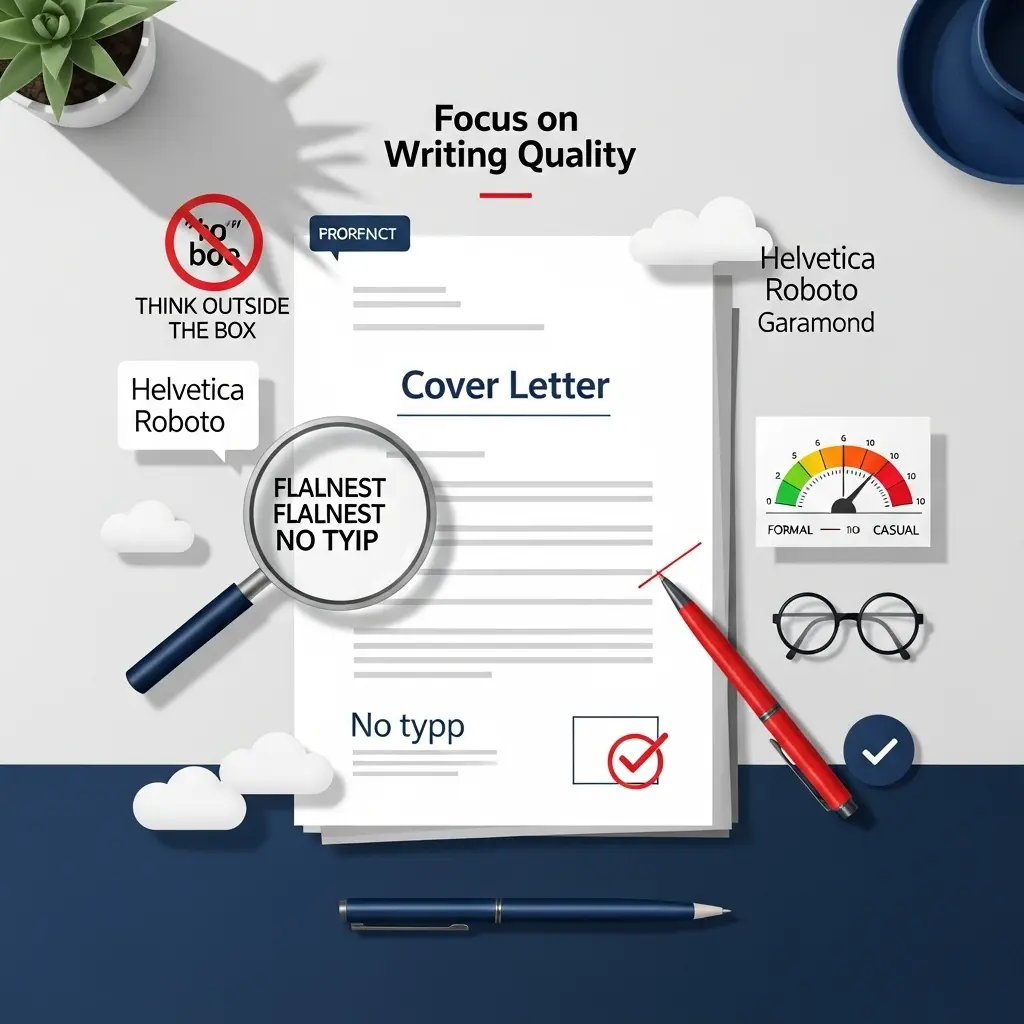
Even though you are a visual artist, typos and poor grammar can ruin your chances. Attention to detail is a requisite skill for designers, and your writing is the first test of that skill. Here are strategies to ensure the quality of your writing matches the quality of your design.
- Show, Don’t Just Tell Instead of saying “I am creative,” describe a time you solved a complex layout problem under a tight deadline. Concrete examples are more powerful than adjectives.
- Keep it Concise Designers know the value of white space. Apply that to your writing. Keep paragraphs short (3-4 sentences maximum). A wall of text is visually unappealing and hard to read.
- Match the Tone If you are applying to a corporate law firm, keep the tone formal. If you are writing an upwork graphic design cover letter for a startup, you can be more casual and energetic.
- Avoid Clichés Phrases like “thinking outside the box” or “hard worker” are overused. Use specific design terminology like “user-centric approach,” “visual hierarchy,” or “brand consistency.”
- Proofread Ruthlessly Read your letter out loud. This helps catch awkward phrasing that spell check might miss. A designer who misses a typo is like a designer who leaves a stray pixel in a logo.
- Check Formatting Ensure your font choice is readable. Do not use Comic Sans or Papyrus. Stick to clean serifs or sans-serifs like Helvetica, Roboto, or Garamond.
- Inject Personality Robots don’t get hired for creative roles. Let your enthusiasm shine through. If you love the company’s new font choice, say so!
Prioritizing these writing strategies will elevate your application from “good” to “unforgettable.” It shows you care about communication as much as you care about aesthetics.
Optimize for Keywords and ATS
Many large companies use Applicant Tracking Systems (ATS) to filter applications before a human ever sees them. This means your graphic design cover letter needs to be machine-readable as well as human-readable. You must strategically weave keywords from the job description into your narrative.
Optimization is not about stuffing keywords randomly; it is about context. If the job asks for “Adobe Creative Suite proficiency,” ensure you mention your expertise with Photoshop, Illustrator, and InDesign naturally.
For example, instead of listing software, say: “In my previous role, I utilized the full Adobe Creative Suite to reduce production time by 15%.” This satisfies the algorithm and impresses the hiring manager simultaneously.
Note: While you want to be creative with your design, be careful with the file format. Some ATS software cannot read complex graphics or text inside text boxes. It is often safer to send a clean, simple PDF for the initial application and bring the creative flair in your portfolio link.
Engage the Hiring Manager

Engagement is the goal of any design piece, and your cover letter is no different. The best letters start a conversation. To truly understand how to write a cover letter for graphic design, you must think of it as the opening line of an interview.
Here are effective strategies to ensure your reader stays engaged from the first word to the last:
- Address Specific Pain Points👈 Companies hire because they have a problem. Maybe they need a rebrand, or their social media is stale. Identify this problem and position yourself as the solution.
- Name Drop (Tastefully)👈 If you have worked with recognizable clients or brands, mention them early. This builds immediate credibility and trust.
- Show, Don’t Just Tell👈 Instead of saying you are a “team player,” describe how you collaborated with copywriters and developers to launch a successful website.
- Ask Intelligent Questions👈 In your conclusion, ask a question about their upcoming projects or design challenges. This shows you are already thinking like a member of the team.
- Keep it Visual👈 Even in text, use bullet points (like these) to break up information. Designers appreciate layout and white space. A dense block of text is a design failure.
- Be Authentic👈 Don’t use a stiff, corporate tone if that isn’t you. If you are funny and quirky, and the company brand is too, let that show. Authentic connection beats generic professionalism.
By engaging the reader on a personal and professional level, you move from being a piece of paper to being a person they want to meet.
Tailor to the Company Brand
One of the biggest mistakes designers make is sending the same generic letter to every job opening. This is a fast track to the rejection pile. Tailoring your application to the specific brand is a critical strategy. It shows you have done your homework and respect their visual identity.
- Research the Visual Style Look at their website, social media, and recent ad campaigns. Is their tone serious, playful, minimalist, or grunge? Mimic this vibe in your writing style.
- Align with Company Values Read their “About Us” page. If they value sustainability, mention your experience with eco-friendly packaging design. If they value innovation, highlight your work with new technologies like AR or AI in design.
- Mention Recent News “I saw that you recently launched the XYZ campaign…” This proves you are paying attention to their current events and are genuinely interested in their growth.
- Customize Your Header If you are skilled in layout, you might subtly adjust the color scheme of your document headers to match the company’s brand colors. It is a small touch that designers notice.
- Solve Their Specific Issues If you are applying to a tech startup, they likely need speed and scalability. If you are applying to a luxury fashion house, they need perfection and elegance. Tailor your skills section to highlight what matters most to them.
- The Freelance Approach If you are writing an upwork graphic design cover letter, the tailoring must be rapid. Clients there want to know: “Can you do this specific task?” and “When can you finish?” Cut the fluff and focus on the deliverable.
- Senior Level Strategy For a senior graphic designer cover letter, tailoring means talking about business goals. Don’t just talk about pixels; talk about how your design leadership will help the company grow its market share.
Remember: A tailored letter beats a generic template every time. It takes more time to write, but the success rate is significantly higher. It demonstrates the effort and attention to detail that employers want to see in their future employees.
Continuous Improvement and Review
The job market changes, and so should your application materials. Continuous improvement is key to staying competitive. Just as you update your portfolio with new work, you should update your cover letter template regularly.
Every time you complete a new major project or learn a new tool (like Figma, After Effects, or Blender), update your master cover letter file. This ensures that when a job opportunity pops up, you have your most recent and impressive achievements ready to go. Furthermore, analyzing why you didn’t get a call back is important. Was your letter too long? Did it lack specific metrics?
It is also helpful to have a peer review your letter. Another set of eyes can catch confusing sentences or passive voice that weakens your message. Ask a mentor or a colleague in the industry to read it and ask them: “Does this sound like a confident professional?”
Ultimately, the ability to critique your own writing is as valuable as the ability to critique your own design. Be objective, be ruthless with edits, and always strive for clarity and impact.
Patience and Persistence
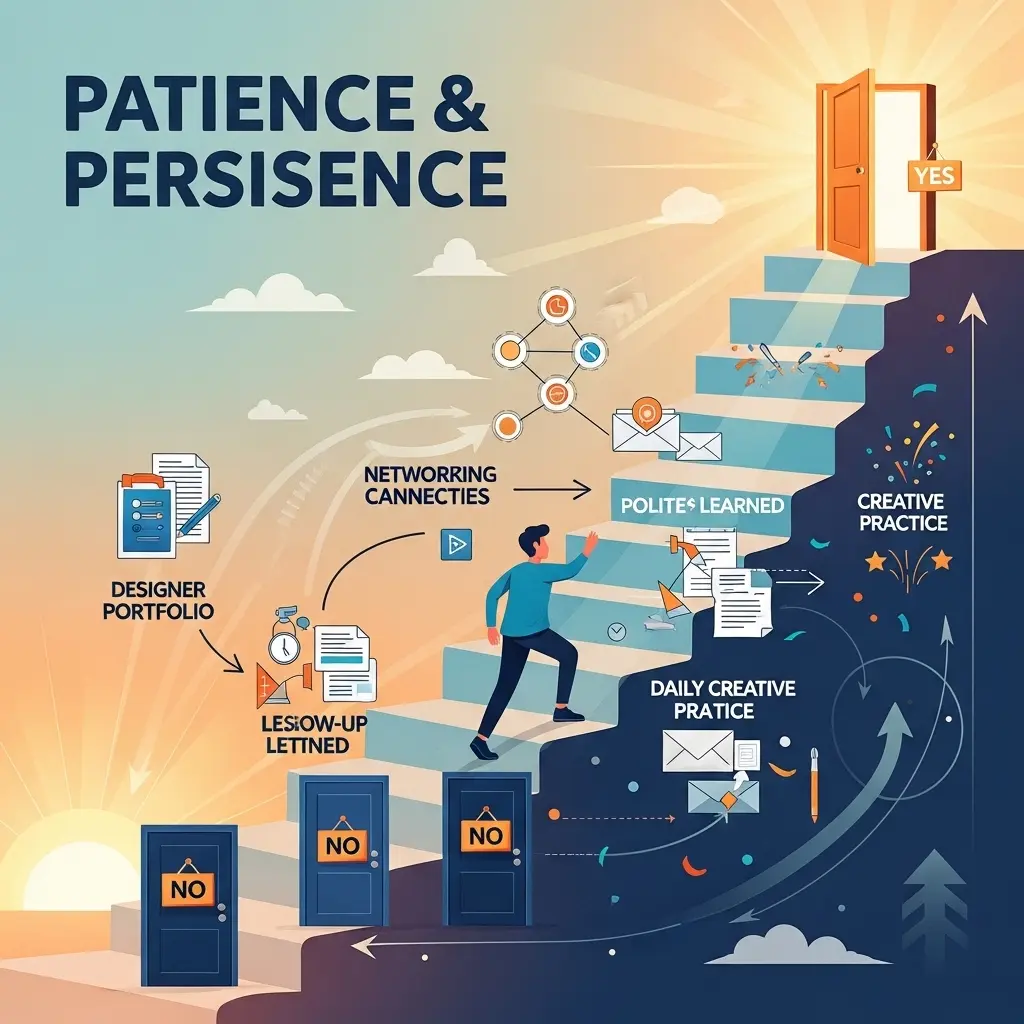
Job hunting requires a thick skin. You might send out ten amazing graphic design cover letter applications and hear nothing back. This is normal. The industry is competitive, and sometimes timing is just not right. However, patience and persistence are traits of successful designers.
- Trust the process.
- Keep refining your portfolio.
- Network constantly.
- Follow up politely.
- Learn from rejections.
- Stay creative daily.
- Celebrate small wins.
Important advice: Do not take rejection personally. A rejection is often a redirection. Keep applying, keep designing, and keep improving your pitch. The right role is out there, and your persistence will eventually unlock the door. Use every application as practice to sharpen your communication skills.
Don’t let silence discourage you. Every “no” brings you one step closer to the “yes” that changes your career. Maintain your passion for design, and let that enthusiasm shine through in every letter you write.
Conclusion: Writing the best graphic design cover letter is about finding the balance between professionalism and personality. It requires you to step back from the visuals and articulate your value in words. Whether you are an entry-level creative or a seasoned art director, the principles remain the same: understand your audience, tell a compelling story, and solve their problems.
By utilizing the templates, examples, and strategies outlined in this guide, you are equipping yourself with the tools needed to succeed. Remember to always link your narrative back to your portfolio and tailor your message to the specific company. With a polished graphic design resume and cover letter, you are ready to make a lasting impression and land the job you deserve.