

Top Online Colleges for Graphic Design Degrees
Table of Contents
The acceptance email from Savannah College of Art and Design felt surreal. SCAD—a school whose alumni work at Pixar, Apple, and Nike—was offering me admission to their online bachelor’s program. Not the “lesser” online version of a campus program, but the same rigorous curriculum, same faculty, same prestigious credential as on-campus students. I’d spent months researching top online colleges for graphic design, comparing rankings, examining accreditation, and analyzing graduate outcomes. Some online programs felt like degree mills—minimal instruction, questionable credentials, vague career support. Others, like SCAD, Rocky Mountain College of Art and Design, and Arizona State University, delivered world-class design education through sophisticated distance learning platforms. The difference wasn’t obvious from websites alone. Every school claimed “industry-leading curriculum” and “experienced faculty”. What separated legitimate programs from diploma factories was accreditation from specialized bodies like NASAD (National Association of Schools of Art and Design), transparent data about graduate employment, and meaningful industry connections translating to internships and job placements. Choosing top online colleges for graphic design degrees requires evaluating institutional reputation, programmatic accreditation, curriculum depth, faculty credentials, technology infrastructure, and documented student outcomes.
Understanding what makes online graphic design programs truly “top-tier” involves distinguishing marketing from substance. Rankings from organizations like BestColleges and TheBestSchools.org provide starting points, highlighting institutions like Arizona State University (ASU Online), Full Sail University, Southern New Hampshire University, and specialized art schools like SCAD and Rocky Mountain College of Art and Design (RMCAD). However, rankings alone don’t tell complete stories. Accreditation status determines whether degrees hold professional credibility and qualify for federal financial aid. Curriculum structure reveals whether programs emphasize conceptual design thinking or merely software training. Faculty profiles show whether instructors are working professionals bringing current industry practices or academics disconnected from professional realities. Graduate outcomes—employment rates, starting salaries, employer recognition—ultimately measure educational value. As explored in our comprehensive directory of online graphic design colleges, the landscape spans from prestigious institutions with selective admissions to accessible programs serving broader populations, each suited to different student needs and career trajectories.
This detailed guide explores top online colleges for graphic design degrees, covering elite art and design institutions delivering specialized creative education, major universities offering graphic design within broader academic contexts, program rankings and evaluation methodologies, the critical role of accreditation in ensuring quality, curriculum structures and specialization options, and documented student outcomes including employment and salary data. Whether you’re a high school graduate seeking prestigious credentials, a career changer pursuing professional design education, or a working designer upgrading skills through formal degrees, this guide provides the analysis needed to identify programs matching your ambitions and circumstances.
Elite Art & Design Institutions Online
Several specialized art colleges have built comprehensive online programs maintaining their reputations for excellence.
Savannah College of Art and Design (SCAD)
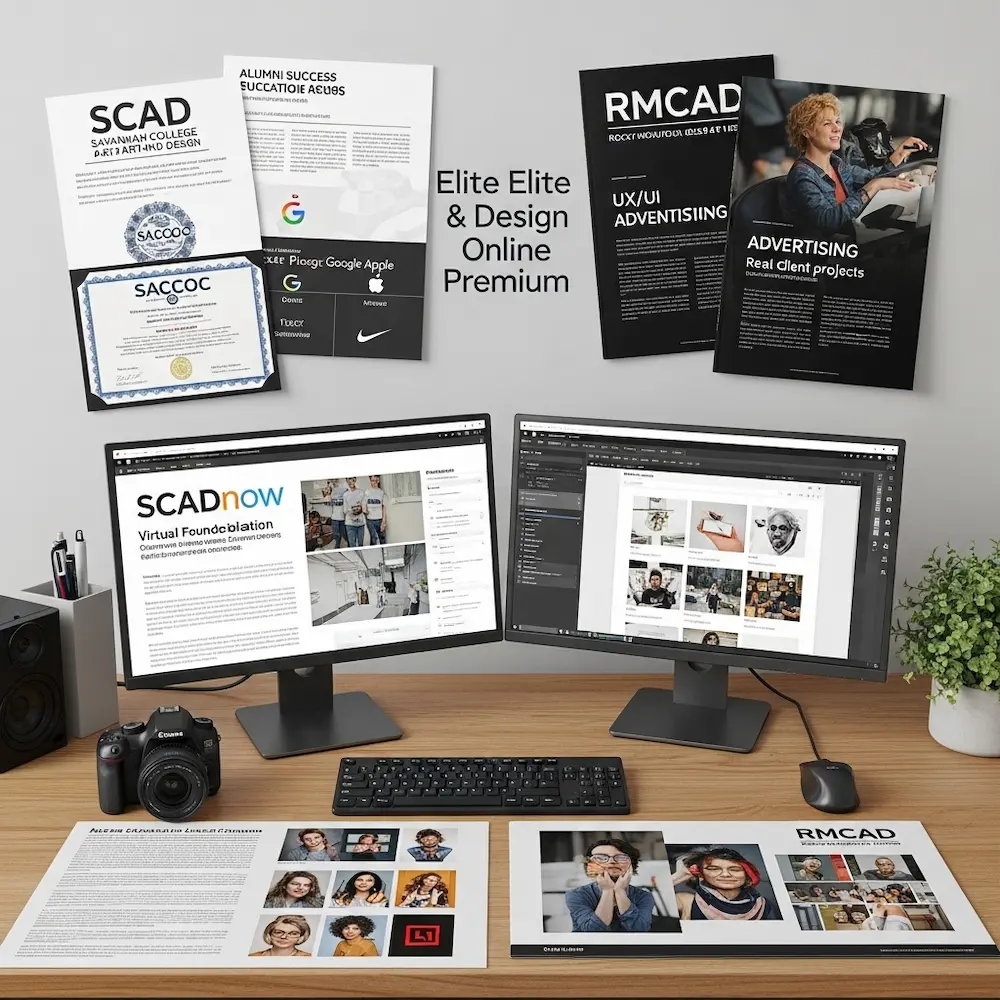
Institutional prestige: SCAD consistently ranks among the world’s top design schools. ScholarsHub’s 2025 rankings list SCAD alongside Rhode Island School of Design (RISD), Yale, and ArtCenter College of Design as leading graphic design institutions. The school’s alumni work at major creative companies—Pixar, Google, Apple, Nike, Facebook—evidencing industry recognition.
Accreditation and credentials: SCAD holds institutional accreditation from “the Southern Association of Colleges and Schools Commission on Colleges (SACSCOC) to award baccalaureate and masters degrees”. This regional accreditation ensures academic quality and federal financial aid eligibility. Beyond institutional accreditation, specific programs hold specialized accreditation—the interior design program has “Council for Interior Design Accreditation,” and architecture programs hold NAAB accreditation. While graphic design doesn’t require specialized accreditation, SCAD’s culture of pursuing excellence across programs elevates all offerings.
Online program structure: SCAD offers its B.A. in Graphic Design “online as part of our award-winning SCADnow program”. The curriculum includes comprehensive foundations—20 credit hours covering drawing, design elements, color theory—before specialized graphic design coursework. This thorough grounding distinguishes SCAD from programs rushing students into software training. Advanced courses cover “digital communication, typography, branding, and UX design” with “emphasis on practical, hands-on projects”.
Industry connections: SCAD maintains relationships with hundreds of creative employers through career fairs, studio visits, and collaborative projects. Online students access these connections through virtual participation and portfolio reviews. The school’s reputation opens doors—SCAD on a resume signals rigorous training and creative excellence to employers.
Investment consideration: As a private institution, SCAD charges premium tuition. However, the credential’s value—employment outcomes, alumni network, industry recognition—often justifies the investment for students pursuing competitive creative careers.
Rocky Mountain College of Art and Design (RMCAD)
Specialized focus: RMCAD dedicates itself exclusively to art and design education, bringing focused expertise to creative programs. The school’s online graphic design degree maintains the same standards as on-campus offerings.
Curriculum depth: RMCAD’s online program provides “multi-faceted” education beyond technical training. Students “develop brands that reflect the future of design and expand their visual storytelling ability,” “explore modern design technology and build a community with user-focused human-centered design practices,” and “gain exposure to design professionals during workshops and presentations”. This comprehensive approach balances creative development, technical skills, and professional practices.
Specialization options: The program offers concentration tracks allowing focused study:
Advertising Design Concentration (9 Credits):
- GD 3700: Advertising Principles (3 Credits)
- GD 3725: Creative Copywriting + Strategy (3 Credits)
- GD 3775: Art Direction (3 Credits)
UX/UI Concentration (9 Credits):
- GD 3810: Digital Design Systems (3 Credits)
- GD 4210: Web Design II (3 Credits)
- GD 4520: Interaction Design (3 Credits)
These concentrations enable students to develop specialized expertise matching career goals.
Technology and tools: Students gain “full access to the Adobe Suite” with software costs included in tuition. The school’s “proprietary virtual learning management system makes engaging with your online class easy”. However, students “will be responsible for the cost of their own DSLR camera” for photography coursework.
Real-world projects: RMCAD emphasizes “hands-on experience with real graphic design projects”. This project-based learning builds portfolios while developing problem-solving skills.
Major Universities with Strong Online Programs
Beyond specialized art schools, several large universities deliver quality online graphic design degrees.
Arizona State University (ASU Online)
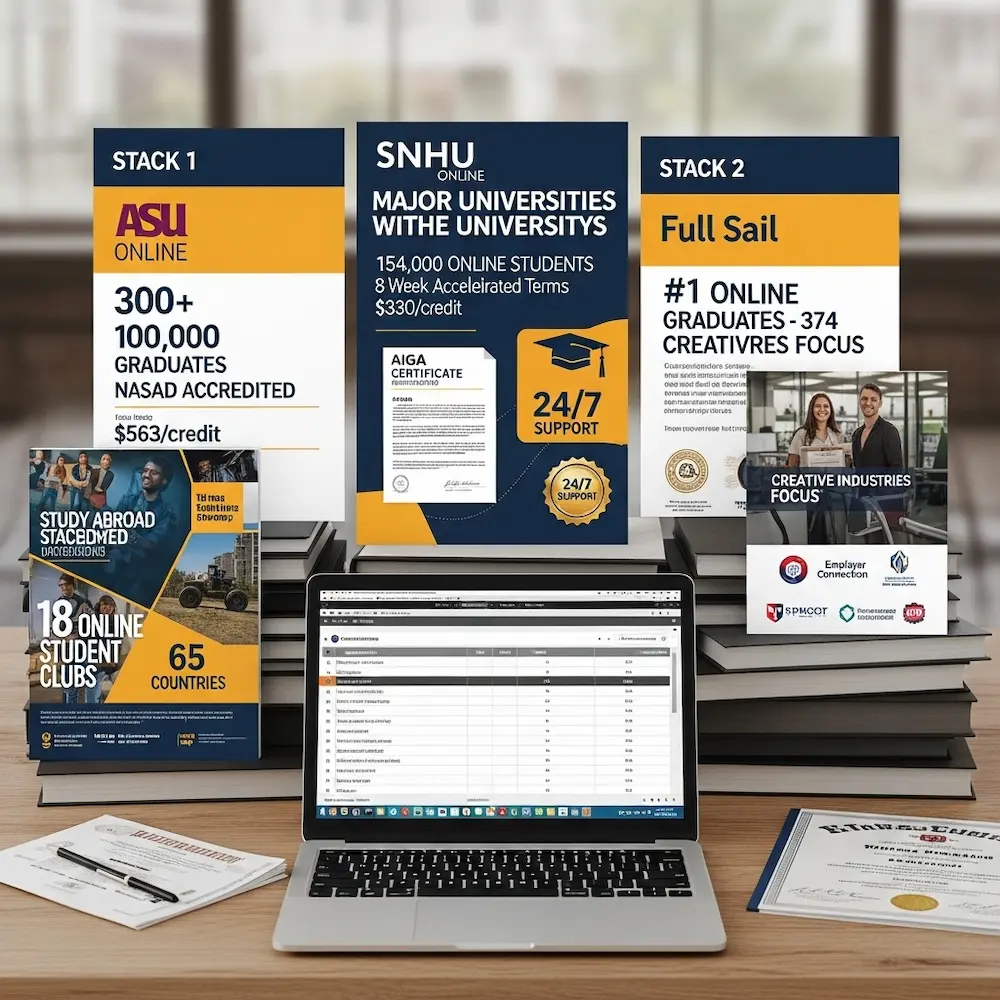
Scale and reputation: ASU Online operates “over 300 undergrad and graduate programs” and “celebrated graduating 100,000 students in April 2024”. This massive scale demonstrates institutional commitment to online education. BestColleges ranks ASU among top online graphic design programs for 2025.
Curriculum scope: The graphic design program covers “visual communication, graphic design history, graphic design principles, motion graphics, and more”. This breadth ensures well-rounded education beyond software training.
Student experience: Despite online delivery, ASU creates community through “a digital community with 18 clubs just for online students”. Study abroad opportunities in “over 65 countries” extend even to distance learners. These features distinguish ASU from purely transactional online programs.
NASAD accreditation: ASU holds accreditation from the National Association of Schools of Art and Design (NASAD), the specialized accrediting body for art and design programs. TheBestSchools.org notes this distinction when ranking ASU’s program. NASAD accreditation signals rigorous standards and professional credibility.
Cost structure: ASU charges “$563 per credit” with the same rate for in-state and out-of-state students. For the 120-credit degree, total tuition reaches approximately $67,560. While substantial, this represents competitive pricing for NASAD-accredited programs.
Southern New Hampshire University (SNHU Online)
Massive online presence: SNHU Online represents “the most popular online school, with over 154,000 online students”. This enormous enrollment demonstrates successful online education infrastructure. BestColleges includes SNHU in its 2025 top programs list.
Accelerated format: SNHU structures courses in “eight weeks long” terms at “$330 per credit”. This accelerated pace enables faster degree completion for motivated students. Traditional semester-long courses may feel slow to working professionals; eight-week intensives maintain momentum.
Concentration options: Students “choose from degree courses in general graphic design or web design and user experience design concentrations”. These specializations align education with specific career paths.
Professional certifications: “The program also allows students to earn certificates through The American Institute of Graphic Arts”. AIGA certification supplements the degree, signaling professional standards to employers.
Support services: SNHU provides “a 24/7 online library, no-appointment-needed tutoring, and accessibility and well-being resources”. These support structures acknowledge online students’ diverse needs and schedules.
Full Sail University
Graduate volume leadership: OnlineU.com ranks Full Sail “#1 overall with 374 graduates from its online bachelor’s in graphic design”. This high graduate count indicates established program with proven completion rates.
Creative specialization: Unlike comprehensive universities offering hundreds of majors, Full Sail focuses exclusively on entertainment, media, arts, and technology fields. This creative specialization brings focused expertise to design education.
Industry connections: Full Sail’s specialization in creative industries facilitates strong employer relationships. Graduates enter networks of alumni working throughout entertainment and media sectors.
Additional Notable Programs
Lesley University (Cambridge, MA) holds NASAD accreditation and charges “$495 per credit” for its 123-credit program. Wilmington University “reports the highest recommendation rate at 97%”, indicating strong student satisfaction. Kentucky Wesleyan College appears on BestColleges’ rankings. Each program offers distinct advantages depending on student priorities—cost, location, specializations, or institutional culture.
Understanding Program Rankings and Selection Criteria
Rankings provide starting points for evaluation but require understanding their methodologies.
How Rankings Work
BestColleges methodology: BestColleges evaluates programs on factors including “academic quality, affordability, and student outcomes”. Their 2025 rankings highlight schools balancing quality with accessibility.
OnlineU.com approach: OnlineU.com ranks programs by “the number of successful program graduates,” giving “data-backed view of options that have proven successful”. High graduate counts indicate programs successfully supporting students through completion.
TheBestSchools.org criteria: TheBestSchools.org emphasizes “program reputation, affordability, and accreditation”. Their methodology weights institutional quality heavily.
What Rankings Miss
Individual fit: Rankings can’t assess whether a program matches your learning style, schedule constraints, or career goals. An accelerated program perfect for disciplined self-starters may overwhelm students needing more structure.
Specialization alignment: General rankings don’t address specialized interests. Students passionate about UX design should prioritize programs offering UX concentrations, even if those programs rank lower overall.
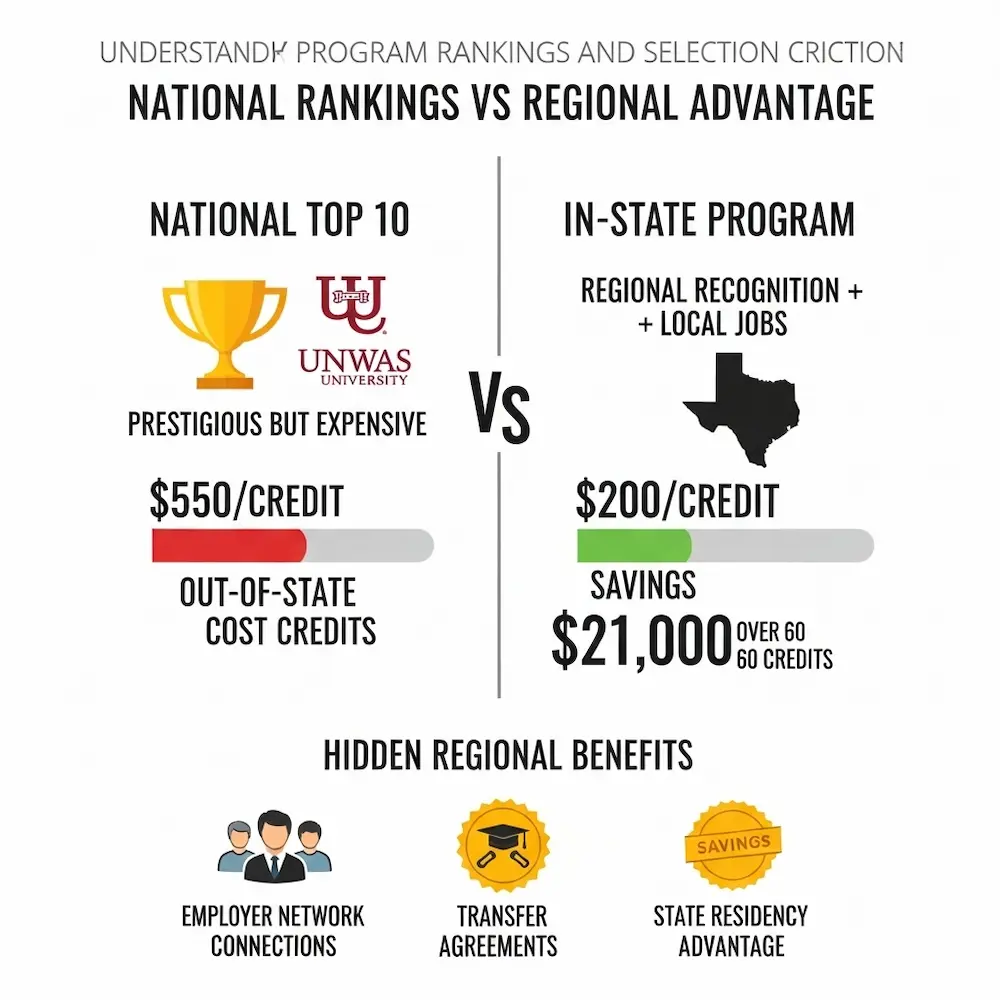
Geographic considerations: Rankings typically ignore regional factors. Texas residents might benefit from in-state programs (explored in our article on online college for graphic design for texas) even if those programs don’t appear on national rankings.
The Critical Role of Accreditation
Accreditation determines whether degrees hold professional credibility and qualify for federal financial aid.
Institutional Accreditation (Required)
Regional accrediting bodies: The six regional accreditors (like SACSCOC in the South, HLC in the Midwest) provide baseline institutional accreditation. SCAD’s accreditation from SACSCOC ensures the institution meets fundamental academic standards. Without regional accreditation, degrees lack credibility and don’t qualify for federal financial aid.
National accreditation: Some schools hold national rather than regional accreditation. While legitimate, national accreditation typically applies to vocational schools and carries less prestige than regional accreditation. For graphic design bachelor’s degrees, regional accreditation is standard.
Programmatic Accreditation (Desirable)
NASAD accreditation: The National Association of Schools of Art and Design provides specialized accreditation for art and design programs. TheBestSchools.org explicitly notes NASAD accreditation for ASU and Lesley University, signaling this distinction matters. NASAD accreditation requires programs meet rigorous standards for curriculum, faculty qualifications, facilities, and student achievement.
Why NASAD matters: While not legally required for graphic design practice, NASAD accreditation signals professional-level education. Employers recognize NASAD-accredited programs as meeting industry standards. Graduate schools may require NASAD accreditation for admission to MFA programs.
Programs without NASAD: Many quality programs don’t hold NASAD accreditation. This doesn’t automatically mean inferior education—accreditation is expensive and time-consuming to pursue. However, NASAD accreditation provides third-party validation of quality.
Curriculum Structures and Learning Outcomes
Strong programs balance creative development, technical skills, and professional practices.
Foundational Studies
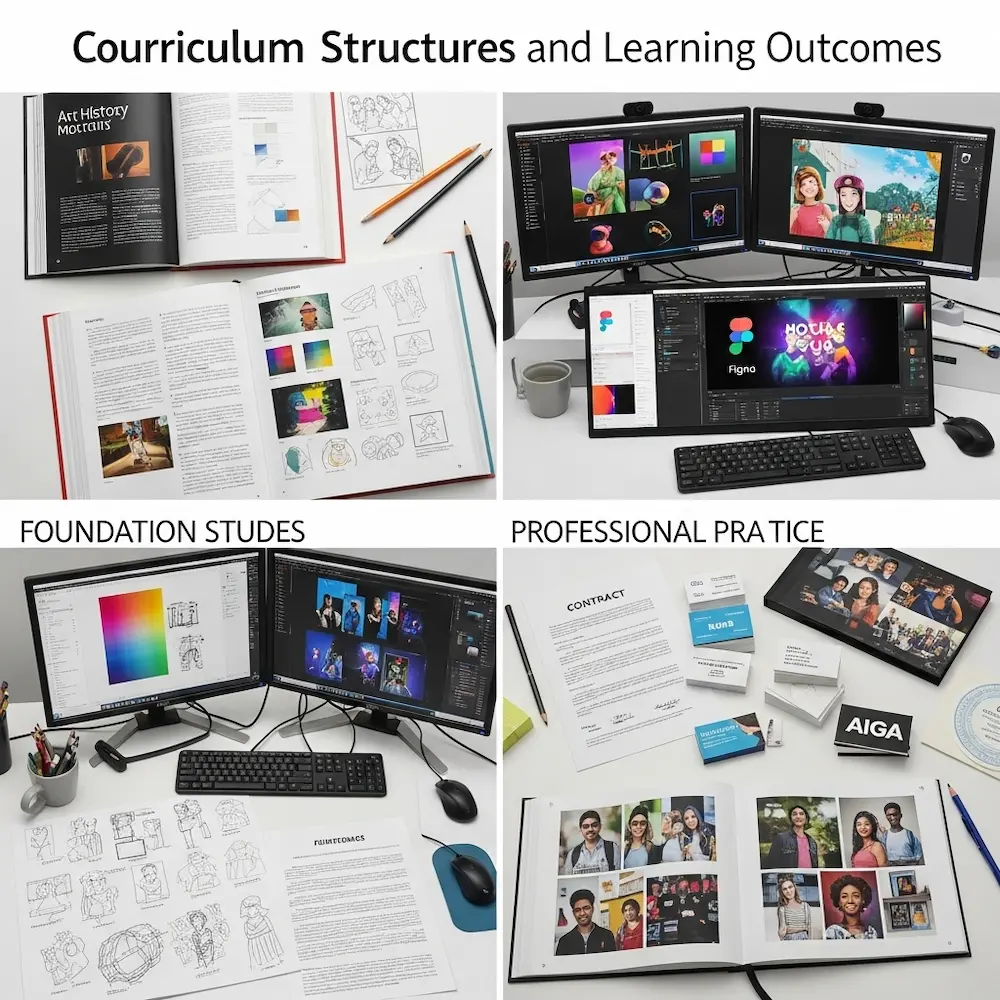
Art and design fundamentals: Quality programs require foundational coursework before specialized study. SCAD’s 20 credit hours in drawing, design elements, and color theory exemplify this approach. Foundations develop visual literacy and creative thinking transcending software.
Design theory and history: Understanding design’s historical context and theoretical frameworks separates designers from software operators. Programs including “graphic design history” (ASU) and design theory produce thoughtful practitioners, not just technicians.
Technical Skills Development
Software proficiency: Professional designers must master Adobe Creative Suite (Photoshop, Illustrator, InDesign) and increasingly Figma for UX work. Programs providing software access and comprehensive training enable skill development.
Emerging technologies: Modern design encompasses motion graphics, interactive media, and UX/UI design. Programs covering “motion graphics” (ASU) and offering UX/UI concentrations (RMCAD, SNHU) prepare graduates for evolving industry demands.
Professional Practices
Portfolio development: Employers hire based on portfolios, not transcripts. Programs structuring curricula around portfolio-building projects prepare students for job searches. RMCAD’s emphasis on “real graphic design projects” exemplifies this approach.
Business and career skills: Freelance designers need business acumen; agency designers need collaboration skills. Programs including professional practice coursework prepare students for career realities beyond design execution.
Student Outcomes: Employment and Career Success
Educational value ultimately manifests in graduate outcomes.
Employment Rates and Career Placement
Institutional data: Schools should transparently report graduate employment rates. Wilmington University’s “97%” recommendation rate suggests strong student satisfaction likely correlating with positive outcomes.
Career services: Programs offering resume reviews, portfolio critiques, and employer connections facilitate job placement. SCAD’s career fairs attracting hundreds of employers exemplify robust career services.
Alumni Success and Industry Recognition
Employer recognition: Degrees from institutions like SCAD carry weight with employers. Alumni networks open doors through recommendations and industry connections.
Starting salaries: While salaries vary by location and specialization, graduates of top programs typically command higher starting salaries than those from lesser-known institutions.
Making Your Decision
Choosing among top online colleges requires weighing multiple factors against your specific circumstances.
Prioritize Based on Goals
Prestige-focused careers: Students targeting competitive agency positions or major corporate design roles benefit from prestigious credentials like SCAD or elite universities. The institutional name carries weight in these markets.
Balanced approach: Most students prioritize quality education at reasonable cost. Programs like ASU combining NASAD accreditation with manageable tuition offer strong value.
Specialization-driven: Students with clear career focuses (UX design, advertising, motion graphics) should prioritize programs offering relevant concentrations. RMCAD’s specialized tracks and SNHU’s concentration options serve this need.
Financial Considerations
Total cost calculation: Multiply per-credit tuition by total credits required. ASU at “$563 per credit” for 120 credits = $67,560 total. Add technology costs, software (if not included), and fees.
Financial aid availability: Accredited programs qualify for federal aid. Investigate institutional scholarships and military benefits.
Return on investment: Higher-cost programs may justify their price through superior outcomes. SCAD’s tuition premium may prove worthwhile if graduates consistently secure better positions and higher salaries.
Conclusion
Identifying top online colleges for graphic design degrees requires looking beyond marketing to examine accreditation, curriculum substance, faculty credentials, and documented outcomes. From elite institutions like Savannah College of Art and Design maintaining rigorous standards and prestigious reputations through sophisticated online delivery, to specialized art colleges like Rocky Mountain College of Art and Design offering focused creative education with concentration options, to major universities like Arizona State and Southern New Hampshire combining accessibility with NASAD-accredited quality—legitimate options span diverse institutional types and price points. My journey from initial confusion about which online programs merited serious consideration to accepting admission at SCAD taught me that reputation, accreditation, and outcomes matter more than flashy websites or bold marketing claims.
The comprehensive analysis here—examining specific institutions, explaining accreditation’s critical role, detailing curriculum structures, and addressing student outcomes—provides framework for evaluating programs matching your ambitions and circumstances. For students also considering more affordable pathways, our article on online graphic design community college explores certificate programs and associate degrees creating strategic transfer opportunities to these top institutions. For comprehensive context on the full landscape of online graphic design education, explore our pillar directory of online graphic design colleges comparing all program types. And for students whose location influences decisions, our guide to online graphic design colleges by state examines regional programs including florida online graphic design colleges, options for texas residents, and programs throughout other states. Together, these resources empower informed decisions transforming creative passion into professional credentials opening competitive design careers.


