

How to Write a Graphic Design Cover Letter with No Experience
Table of Contents
Breaking into the creative industry can feel intimidating, especially when job descriptions ask for years of experience that you do not have yet. However, an effective entry level graphic design cover letter is your secret weapon. It allows you to shift the focus from your lack of employment history to your abundance of potential, creativity, and technical skill.
Hiring managers for junior roles are not looking for a veteran creative director. They are looking for raw talent, a willingness to learn, and a strong work ethic. Your cover letter is the perfect place to demonstrate these traits.
Whether you are a student seeking an internship or a recent graduate looking for your first full-time gig, this guide will show you how to craft a narrative that gets you hired. If you need inspiration on layout and visual styles, you can also explore our main collection of graphic design cover letter examples.
You do not need a decade of experience to make an impact. You simply need to know how to frame your educational background and personal projects as professional assets. Below, we will outline the specific strategies for writing a graphic designer cover letter no experience required.
Turn Your Education into Experience
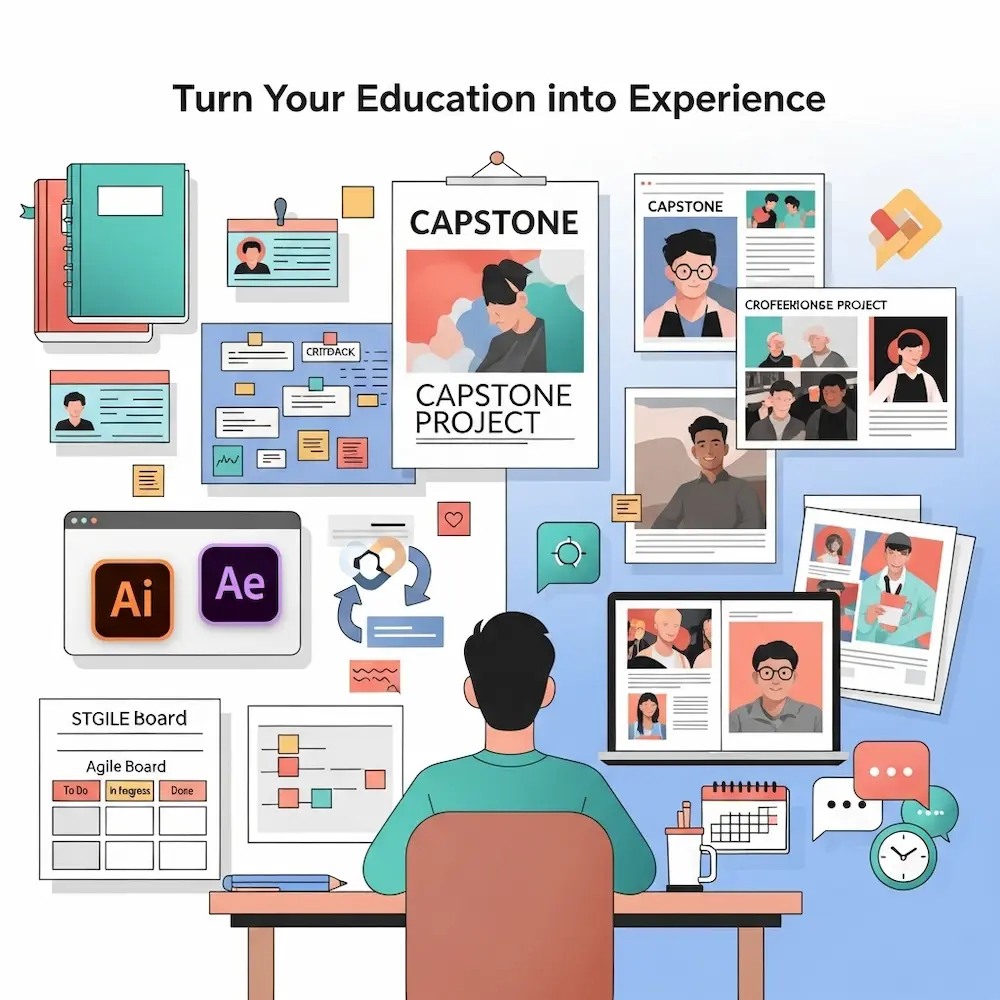
One of the biggest mistakes new designers make is thinking their degree is just a piece of paper. In reality, your time as a student was your first job. You met deadlines, accepted critiques, and solved visual problems. When writing a graphic design student cover letter, you must treat your coursework like client work.
Instead of simply listing your GPA, discuss the specific challenges you overcame in your studio classes. Did you lead a group project? Did you organize a student exhibition? These are professional skills.
Here is how to effectively translate school work into work experience:
- Highlight “Capstone” Projects 📌 Your senior thesis or final major project is a massive undertaking. Describe it as a long-term campaign where you managed research, ideation, and production.
- Mention Tools and Software 📌 Don’t just list software in a sidebar. Mention how you used Adobe After Effects to animate a logo for a class presentation. Context proves proficiency.
- Discuss Critique and Feedback 📌 Employers want to know you can handle feedback. Mention a time a professor critiqued your work and how you iterated on the design to improve it.
- Reference Industry-Standard Workflows 📌 If your classes used Agile methodology or specific file management systems, mention this. It shows you are ready to plug into a professional team.
- Showcase Soft Skills 📌 Time management and communication are critical. Explain how you balanced multiple design projects during finals week to demonstrate reliability.
In short, your education is valid experience. Frame it correctly, and employers will see a disciplined designer ready to work, rather than just a student.
The “No Experience” Strategy
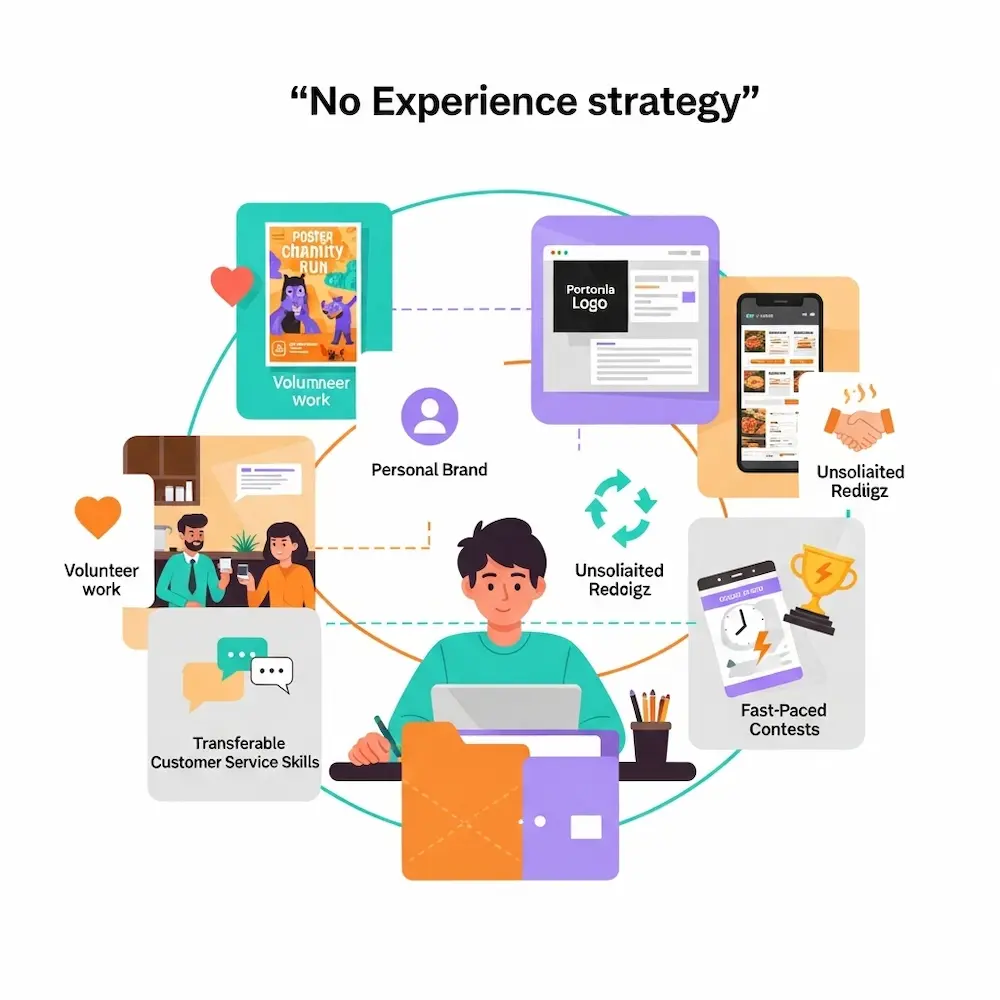
If you are writing a junior graphic designer cover letter without a formal internship, you might feel stuck. However, “no formal experience” does not mean “no design experience.” You have likely done freelance work, volunteer gigs, or passion projects. These count.
To build a compelling argument, you must leverage everything you have created. Here are strategies to fill the gap:
- Volunteer Work Did you design flyers for a charity run or a local animal shelter? This is real client work. You solved a problem for an organization. Treat it with the same seriousness as a paid contract.
- Personal Branding Your own personal brand is a case study. Discuss how you developed your own logo and website. It shows self-awareness and the ability to execute a cohesive identity system.
- Unsolicited Redesigns If you redesigned a popular app or a local restaurant’s menu for fun, include it. Explain your thought process and why your solution is better than the existing one.
- Transferable Skills If you worked in retail or service, you have customer service skills. Designers serve clients. Explain how handling difficult customers at a coffee shop prepared you for client relations in design.
- Contests and Hackathons Participation in design challenges like “36 Days of Type” or local hackathons shows passion and the ability to work fast. It proves you design because you love it, not just because you have to.
By treating every creative output as a professional project, you fill your cover letter with evidence of your skill. You prove that you are a “doer,” which is exactly what creative directors want in a junior hire.
Structure of an Entry Level Letter
Structure is even more important for beginners. A messy letter suggests a messy designer. A clean, logical flow suggests a disciplined mind. When crafting your entry level graphic design cover letter, stick to a proven formula that guides the reader through your narrative.
You want to lead with your strongest asset. For students, that is often passion and fresh technical knowledge. For career switchers, it might be maturity and transferable skills.
Do not ramble. Keep it to one page. Use short paragraphs. Here is the ideal anatomy for your letter.
Note: Ensure your contact header matches your resume and portfolio exactly. This creates a cohesive “brand package” that looks professional before they even read a word.
Mastering the Internship Application
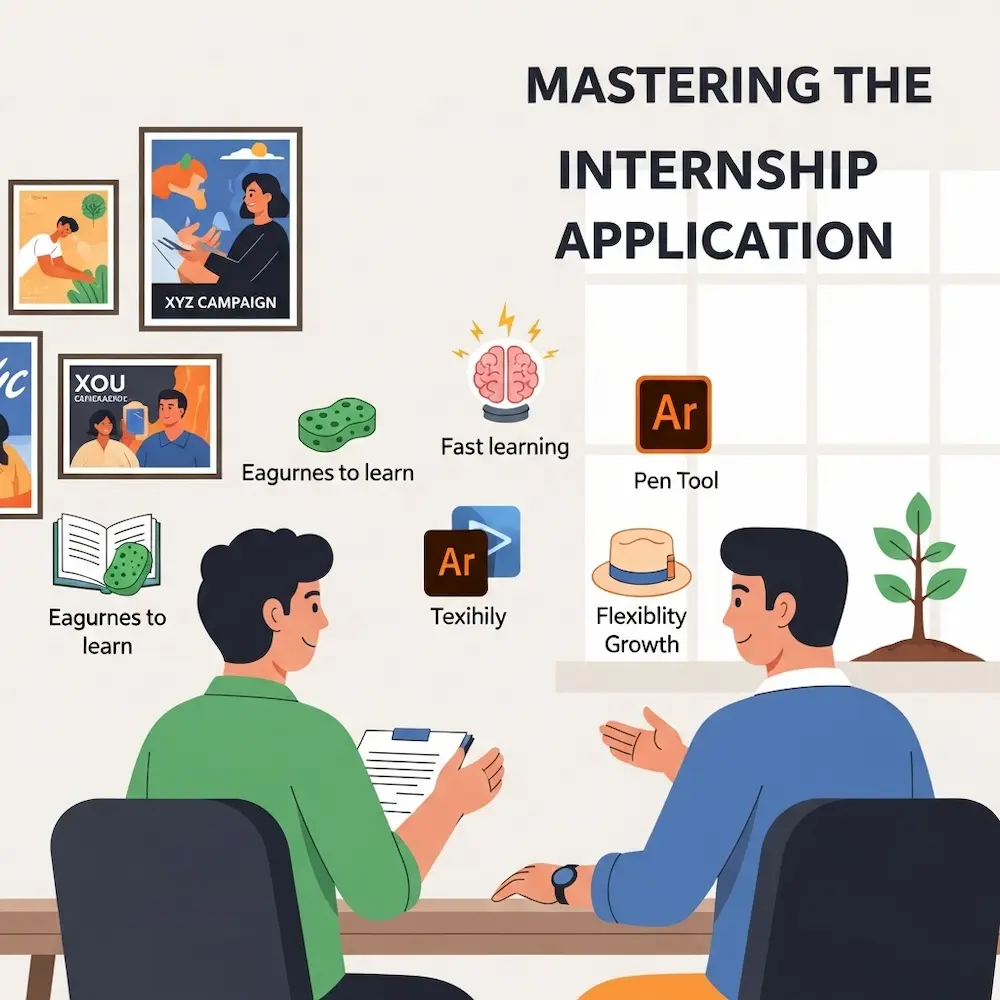
A graphic design internship cover letter serves a slightly different purpose than a full-time job application. For an internship, the company expects to mentor you. They are not looking for perfection; they are looking for potential and a good attitude.
Your goal here is to express eagerness to learn from them specifically. Research the agency or company deeply. Mention specific campaigns they have launched. Saying “I want to learn from the team that created the XYZ Campaign” is infinitely more powerful than “I want to gain experience.”
- Express Humility and Hunger👈 Acknowledge that you have a lot to learn, but emphasize that you are a fast learner. “I am eager to absorb your team’s workflow and contribute in any way possible.”
- Highlight Technical Readiness👈 Mentors don’t want to teach you how to use the Pen Tool in Illustrator. Assure them you have the technical basics covered so you can focus on learning high-level strategy.
- Be Flexible👈 Interns often wear many hats. Express your willingness to help with production work, file organization, or research. It shows you are a team player.
- Show Long-Term Interest👈 Companies often hire interns as full-time employees later. Hint that you see a future with them. “I hope to grow with [Company Name] and contribute to future successes.”
By positioning yourself as a helpful, low-maintenance sponge for knowledge, you become the ideal intern candidate.
Showcasing Soft Skills
In the absence of a long work history, soft skills become your currency. Technical skills get you the interview, but soft skills get you the job. A junior graphic designer cover letter should heavily feature traits like reliability, communication, and adaptability.
- Communication Design is communication. If you can articulate your ideas clearly in your letter, they will trust you can do it with clients.
- Time Management Students juggle multiple classes. Highlight this. “Managed 5 studio courses simultaneously while maintaining a 3.8 GPA” proves you can handle deadlines.
- Collaboration Design is rarely a solo act. Mention group projects where you mediated conflicts or combined different ideas into a cohesive result.
- Curiosity The design world changes fast. Mention blogs you read, podcasts you listen to, or new tools you are teaching yourself (like AI design tools or 3D rendering).
- Resilience Talk about a project that failed or went wrong, and how you fixed it. Resilience is more valuable to a creative director than raw talent.
- Attention to Detail Prove this by having zero typos in your letter. A designer who misses typos is a designer who sends the wrong file to print.
Remember: Hard skills can be taught. Soft skills are harder to develop. If you can prove you are easy to work with and reliable, many employers will overlook a lack of technical experience.
Common Mistakes to Avoid
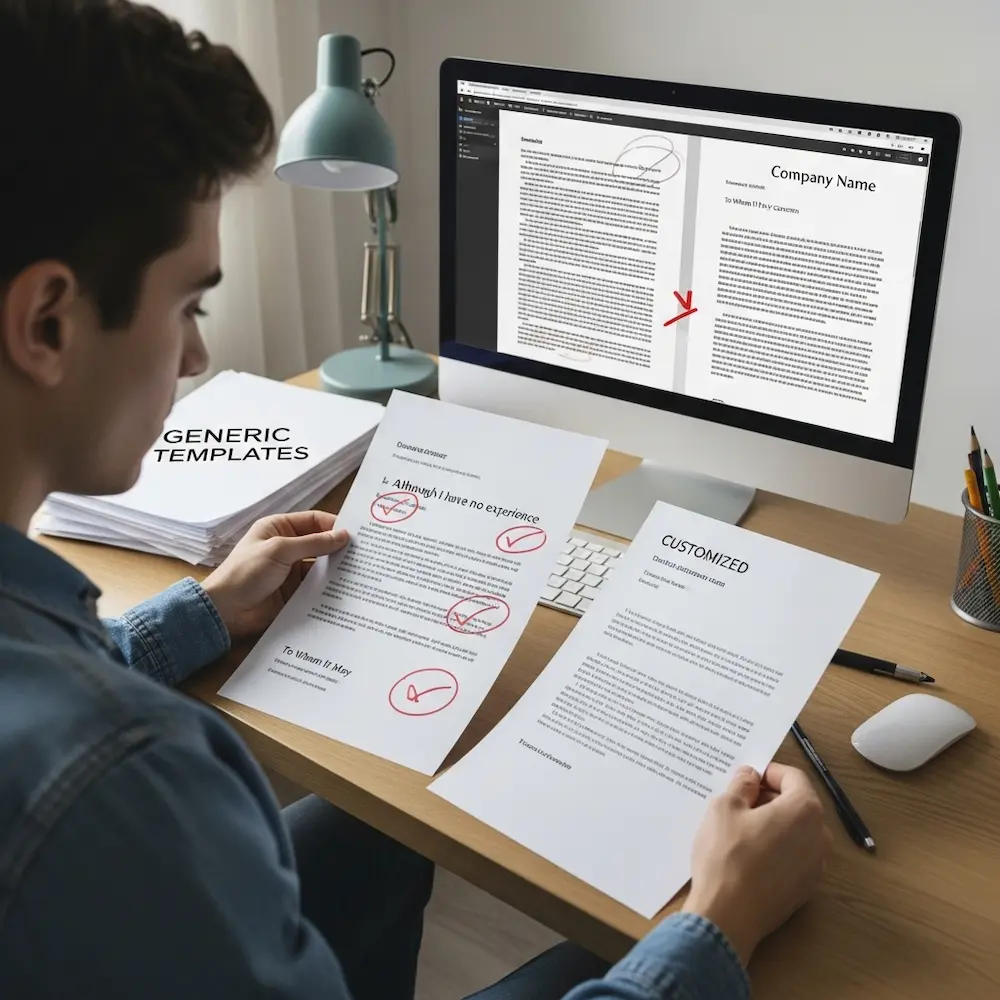
When you are anxious about having no experience, it is easy to fall into traps that make you look amateur. Avoiding these common pitfalls will instantly elevate your graphic designer cover letter no experience application above the rest.
One major mistake is apologizing for what you lack. Never say “Although I have no experience…” This draws attention to your weakness. Instead, focus on your strength: “My background in fine arts gives me a unique perspective on composition…”
Another error is being too formal or academic. You are not writing an essay for a professor. You are writing a business letter to a creative professional. Keep the tone respectful but conversational and confident. Avoid dense blocks of text; keep it airy and scannable.
Finally, do not send a generic template. We can tell. If you forget to change the company name, or if the letter is so vague it could apply to any studio, it goes in the trash. Customize every single letter.
The Final Polish
Before you hit send, you need to ensure your entry level graphic design cover letter is flawless. This is your first design deliverable. Treat it with care.
- Proofread backwards.
- Check PDF export.
- Verify contact links.
- Read it out loud.
- Check file naming.
- Match resume font.
Tip: Name your file professionally. “John_Doe_Cover_Letter_AgencyName.pdf” is much better than “final_v3_copy.pdf”. It shows you understand file management and are organized.
Take a deep breath. You have done the work. You have learned the skills. Now, let your cover letter open the door so your portfolio can do the rest.
Conclusion: Landing your first job in graphic design is a challenge, but it is entirely possible with the right approach. By crafting a strong entry level graphic design cover letter, you bridge the gap between your potential and the employer’s needs. Remember, every expert was once a beginner.
Focus on your passion, your willingness to learn, and the unique perspective you bring as a fresh talent. Use your education and personal projects as evidence of your capability. With persistence and a well-written letter, you will find a team that values what you have to offer.


