

Masters in Graphic Design: Your Complete Guide to Advanced Design Education
Table of Contents
A masters in graphic design represents the pinnacle of advanced education in visual communication, combining creative excellence with strategic thinking and research-driven methodologies. As the design industry continues to evolve in 2025, professionals with graduate-level expertise are increasingly sought after for senior positions, teaching roles, and specialized creative leadership opportunities. This comprehensive guide explores everything you need to know about pursuing a masters in graphic design, from understanding different degree types to evaluating program requirements and career outcomes.
Whether you’re a practicing designer looking to advance your career, an educator seeking terminal credentials, or a creative professional aiming to specialize in a niche area, a graduate degree in graphic design can open doors to higher salaries, leadership roles, and cutting-edge creative work. Throughout this guide, we’ll examine the various masters programs in graphic design available globally, discuss admission requirements, explore career pathways, and help you determine if this investment aligns with your professional goals. We’ll also connect you to detailed resources on specific aspects of graduate design education to support your decision-making process.
Understanding Masters in Graphic Design Degrees
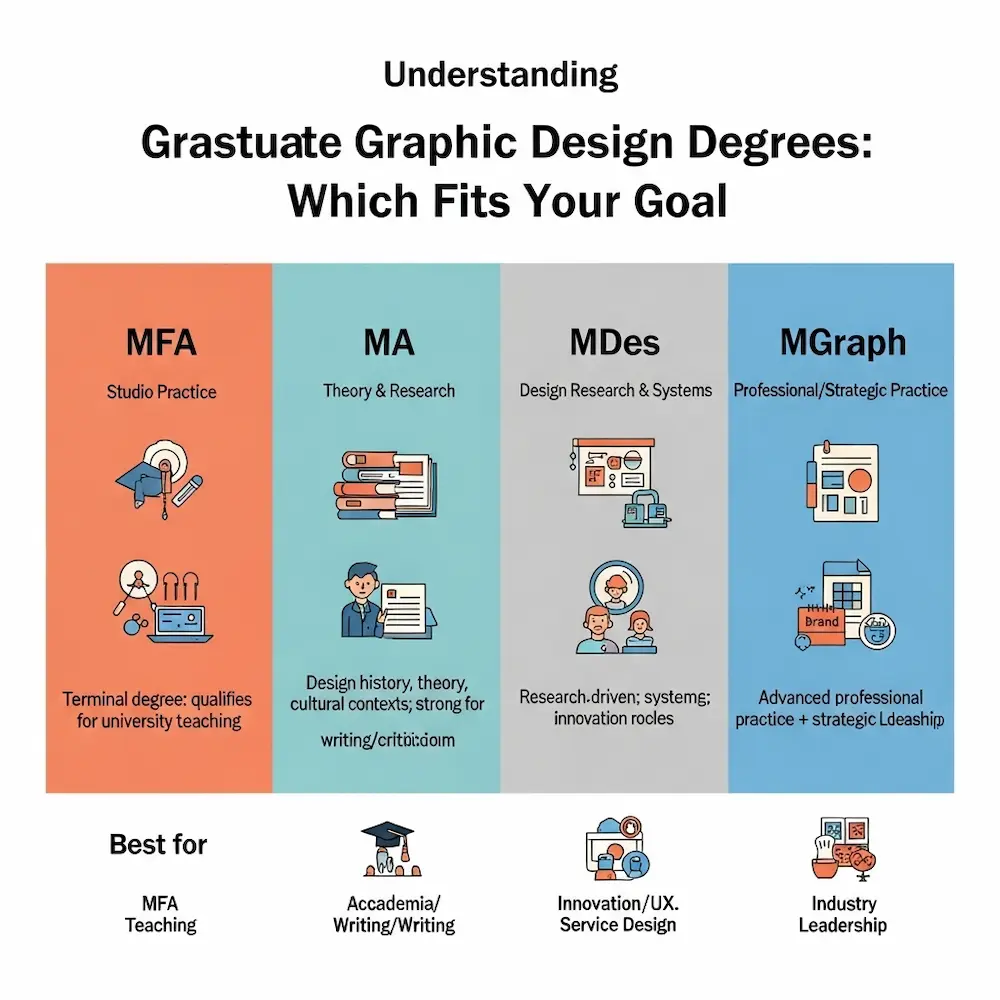
Graduate education in graphic design comes in several distinct formats, each designed to serve different career goals and educational philosophies. The most common graduate degrees include the Master of Fine Arts (MFA), Master of Arts (MA), Master of Design (MDes), and Master of Graphic Design (MGraph). The MFA in graphic design is considered the terminal degree in studio practice, meaning it’s the highest credential in the field and qualifies graduates to teach at the university level. This degree emphasizes hands-on creative practice, portfolio development, and the refinement of your artistic voice through intensive studio work and critique sessions.
The MA in graphic design takes a more theoretical and research-oriented approach, focusing on the critical study of design history, theory, and cultural contexts. While an MA program still involves creative work, it places greater emphasis on scholarly inquiry and may appeal to those interested in design criticism, writing, or museum curation. The Master of Design (MDes) and Master of Graphic Design (MGraph) are also recognized as terminal degrees and tend to blend professional practice with strategic design thinking. These programs often emphasize design research, systems thinking, and preparing graduates for innovation-focused roles in industry.
Understanding these distinctions is crucial when selecting a program that aligns with your career aspirations. For a detailed analysis of whether this investment makes sense for your situation, explore our comprehensive guide on is a masters in graphic design worth it.
Career Benefits and Salary Expectations

Earning a masters degree in graphic design significantly enhances your career prospects and earning potential in the competitive creative industry. According to 2025 data, graphic design graduates with master’s degrees earn an average annual salary of $55,951, with top earners reaching $77,500 or more. Those who advance to specialized roles such as graphic design teachers can command salaries exceeding $110,000 annually, while digital content strategists and creative directors earn between $83,000 and $96,000. Senior graphic designers typically earn between $65,000 and $102,620, representing a substantial increase over entry-level positions.
Beyond financial compensation, a masters in graphic design qualifies you for advanced roles that are often inaccessible with only a bachelor’s degree. These include creative director positions, brand strategist roles, design research positions, and university-level teaching opportunities. Many employers specifically prefer or require graduate degrees for senior-level positions, giving you a competitive advantage in the job market. The degree also provides opportunities to work across diverse industries, open your own design studio, or pursue freelance work at premium rates.
The career progression typically follows this path: Junior Graphic Designer → Graphic Designer → Senior Graphic Designer → Lead Graphic Designer → Creative Director. Graduate education accelerates this trajectory by providing advanced skills in visual strategy formulation, multidisciplinary design integration, and creative team leadership.
Types of Masters Programs Available
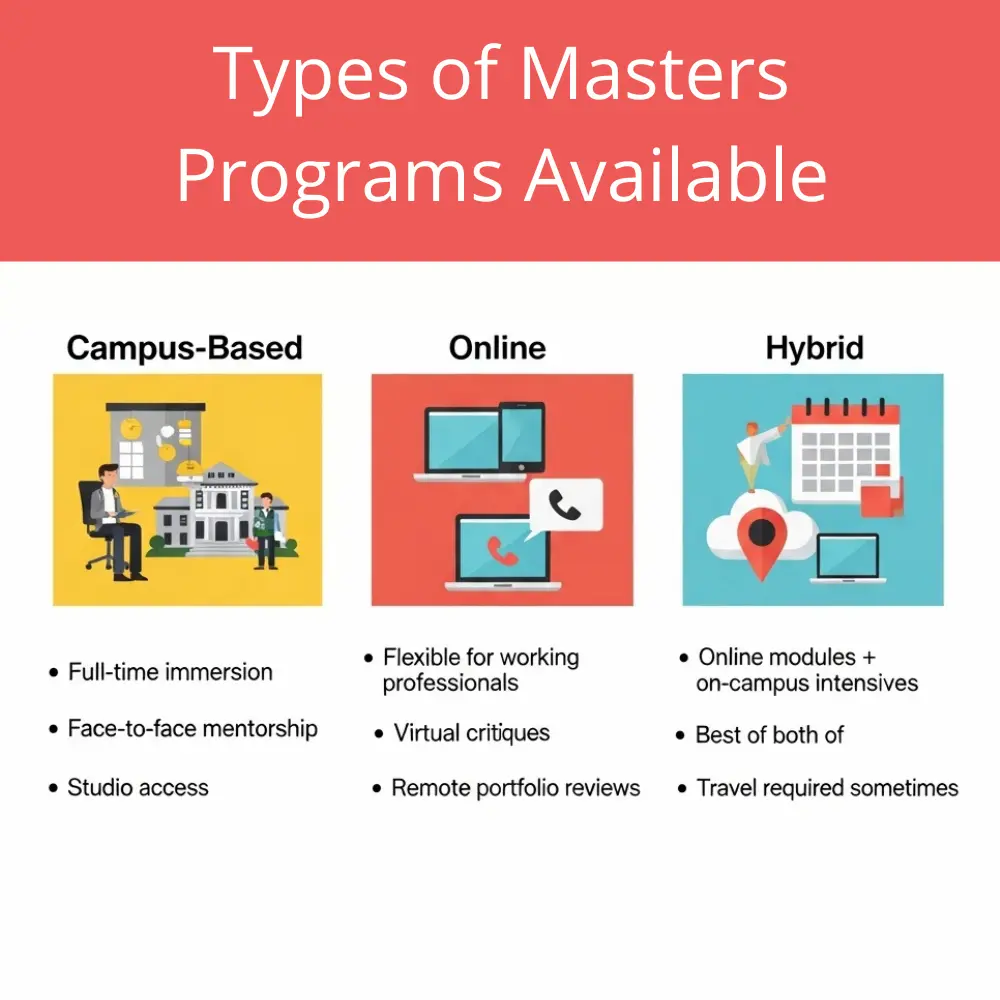
Graduate programs in graphic design are offered in multiple formats to accommodate different learning preferences and life circumstances. Campus-based programs provide immersive experiences with face-to-face instruction, studio access, and direct mentorship from faculty. Prestigious institutions like Rhode Island School of Design (RISD), Yale School of Art, California College of the Arts, and Savannah College of Art and Design (SCAD) offer highly competitive on-campus MFA programs. These programs typically require two to three years of full-time study and emphasize intensive studio practice, exhibitions, and peer critique.
Online masters in graphic design programs have expanded significantly, offering flexibility for working professionals who cannot relocate or commit to full-time campus attendance. Institutions like Liberty University, Academy of Art University, and Arden University provide accredited online graduate degrees that cover typography, digital illustration, visual communication design, and digital marketing. These programs use virtual studios, online collaboration tools, and digital portfolio reviews to deliver comprehensive education while allowing students to maintain their current employment.
Hybrid programs combine online coursework with periodic on-campus intensives, offering a middle ground between flexibility and immersive learning. International options are also abundant, with top programs available in Europe, particularly in the UK, Italy, and France, known for their strong design traditions. For a detailed exploration of flexible learning options, consult our guide on masters in graphic design online.
Admission Requirements and Portfolio Standards
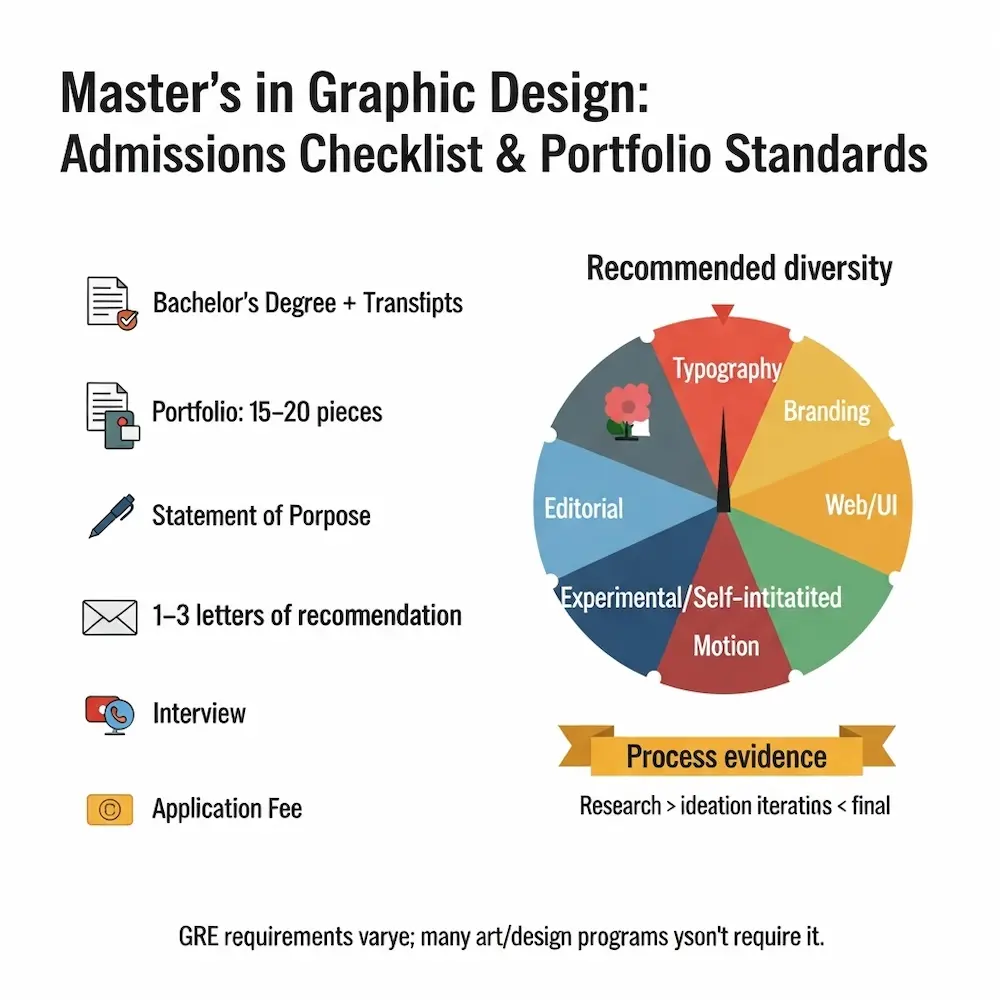
Gaining admission to a competitive masters in graphic design program requires careful preparation and a strong application package. Most programs require a bachelor’s degree from an accredited institution, though the undergraduate major doesn’t always need to be in graphic design. Portfolio submission is the most critical component, typically consisting of 15-20 pieces that demonstrate your visual thinking, technical skills, and creative voice. The portfolio should showcase diverse work including typography, branding projects, print and digital design, and self-initiated projects that reveal your unique perspective.
Additional application materials include academic transcripts, letters of recommendation (typically 1-3), a statement of purpose explaining your creative interests and career goals, and sometimes a writing sample addressing contemporary design issues. Some programs also require GRE scores, though this requirement is becoming less common in art and design fields. Application fees typically range from $70-$100, and interviews (phone, virtual, or in-person) are common for competitive programs.
When preparing your portfolio, focus on projects that demonstrate design thinking, showing your process from research and ideation through final execution. Include a variety of media—web design, motion graphics, editorial design, and experimental work—to showcase your versatility. Each piece should be accompanied by a brief description explaining the project brief, your approach, and outcomes. For comprehensive information on what programs expect, review our detailed article on masters in graphic design requirements.
Top Programs and Global Study Options
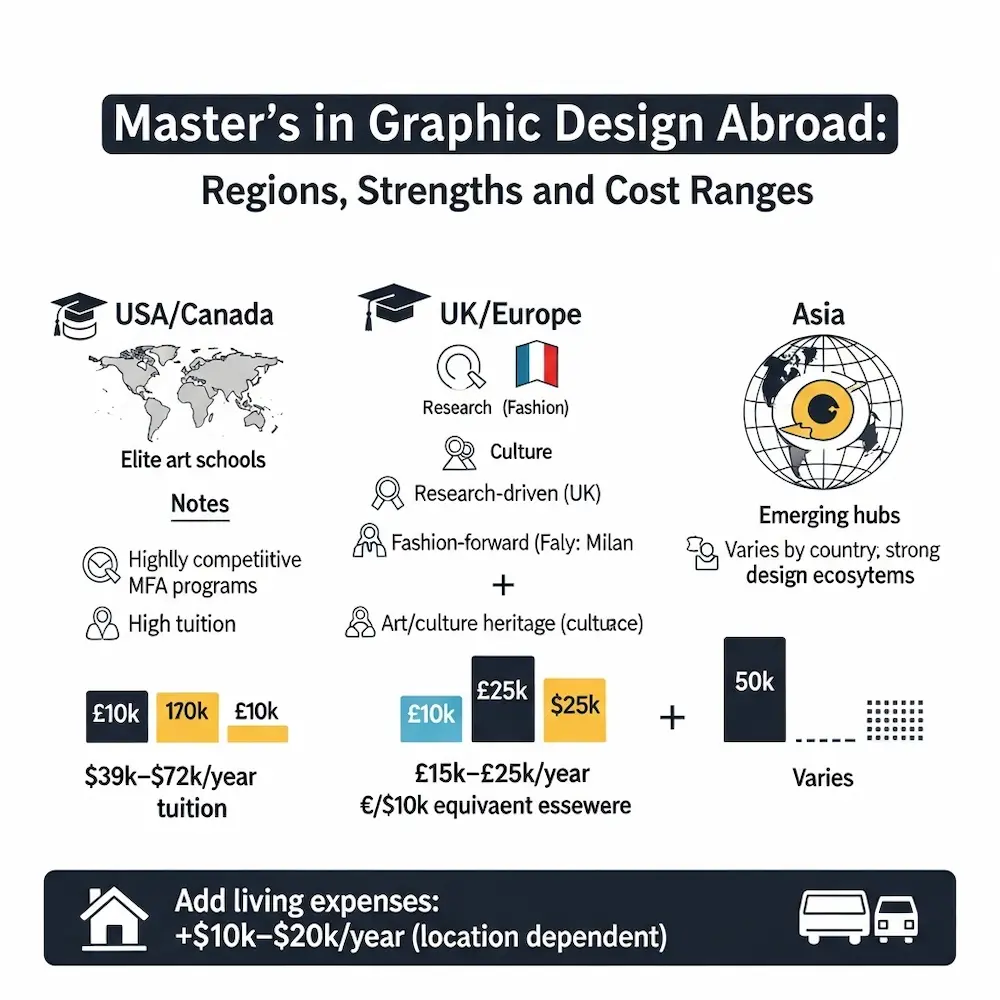
The landscape of graduate graphic design education includes world-class institutions across North America, Europe, and Asia. In the United States, prestigious programs include Rhode Island School of Design (RISD), Yale School of Art, California College of the Arts, Parsons School of Design, Pratt Institute, and Savannah College of Art and Design (SCAD). These institutions offer rigorous MFA programs with acceptance rates as low as 14%, indicating highly competitive admissions. RISD’s graphic design department alone enrolls approximately 165 students, making it one of the largest and most established programs.
European programs provide distinctive advantages, particularly in the UK, Italy, and France. The UK offers innovative, research-driven environments with programs at institutions emphasizing visual communication and management. Italy, especially Milan and Florence, specializes in fashion-forward design education through Politecnico di Milano, Istituto Marangoni, and Domus Academy. France provides artistic and aesthetic design education with strong cultural heritage, while other European nations offer affordable tuition with English-language instruction.
Tuition costs vary significantly by location: US graduate programs range from $39,105 to $72,594 per academic year, UK programs average £15-25,000 annually, and European programs range from INR 8-20 lakhs ($10,000-$25,000). Living expenses add another $10,000-$20,000 annually depending on location. For comprehensive guidance on international study options, explore our guide on masters in graphic design abroad.
Curriculum and Specialization Areas
Masters in graphic design programs feature comprehensive curricula that blend advanced technical skills, theoretical knowledge, and professional practice. Core coursework typically covers advanced typography, visual communications, creative problem-solving, digital design technologies, design research methodologies, and portfolio development. Students engage in intensive studio work where they develop a cohesive body of work that demonstrates their unique creative vision and technical mastery.
Specialization areas allow students to focus their graduate studies on specific design disciplines aligned with their career goals. Common specializations include brand identity and strategy, motion graphics and animation, UI/UX and interactive design, editorial and publication design, type design, environmental graphics, packaging design, and design for social impact. Many programs encourage interdisciplinary exploration, allowing students to incorporate methods from other art forms, collaborate across departments, or integrate emerging technologies like AI and AR/VR into their practice.
Teaching assistantships and pedagogy courses are common in MFA programs, preparing graduates for academic careers. Students learn to present their work professionally through exhibitions, readings, and portfolio reviews, developing skills essential for career advancement. The culmination of most programs is a thesis project or exhibition, a substantial body of work that showcases the student’s developed artistic voice and readiness for professional practice. For information on comparing specific program offerings, visit our article on masters programs in graphic design.
Career Pathways and Industry Opportunities
Graduates with masters degrees in graphic design enjoy diverse career pathways across multiple industries. Corporate roles include senior graphic designer, art director, creative director, brand strategist, and visual communications manager. Tech industry positions encompass UX/UI designer, product designer, design systems specialist, and user researcher. Academia offers opportunities as university professor, program director, or design researcher at colleges and universities.
Agency and studio work provides roles such as creative director, design principal, or studio founder in advertising agencies, design consultancies, and branding firms. Publishing and media careers include art director, editorial designer, or creative lead at magazines, newspapers, and digital media companies. Entrepreneurial paths allow graduates to establish independent design studios, offer specialized freelance services, or develop design products and tools.
Emerging opportunities in 2025 include design for artificial intelligence interfaces, sustainable design consulting, design thinking facilitation, and creative technology roles that blend design with coding and emerging platforms. The design field continues evolving with technology, offering substantial influence and decision-making authority as designers progress from junior roles to senior positions. Salary progression reflects this growth: junior designers earn $41,500-$55,000, mid-level designers earn $55,000-$65,000, senior designers earn $65,000-$102,620, and creative directors and managers earn $90,000-$110,000+.
Conclusion
Pursuing a masters in graphic design represents a significant investment in your creative future, offering pathways to advanced roles, specialized expertise, and leadership positions in the evolving design industry. Whether you choose an MFA to develop your artistic practice, an MA to deepen your theoretical knowledge, or an MDes to focus on design innovation, graduate education provides the credentials, skills, and professional network to elevate your career. With average salaries ranging from $55,000 to over $110,000 and opportunities spanning corporate design, technology, education, and entrepreneurship, the potential returns are substantial for those who leverage their advanced degree strategically.
The landscape of masters programs in graphic design is diverse, with options for every learning style, budget, and career aspiration—from prestigious on-campus programs at institutions like RISD and Yale to flexible online degrees and international study opportunities in Europe and beyond. Success begins with thorough research, honest assessment of your goals, and preparation of a compelling portfolio that demonstrates your creative potential.
As you continue exploring graduate education options, utilize the detailed resources throughout this guide and our related articles on program evaluation, admission strategies, and career planning. Whether you’re just beginning to consider graduate school or actively preparing applications, the information provided here will support your journey toward becoming a master-level design professional. Visit our comprehensive guides on is a masters in graphic design worth it, masters in graphic design online, and masters programs in graphic design to deepen your understanding and make the best decision for your creative career.
FAQ
What is the difference between an MFA and MA in graphic design?
An MFA in graphic design is a terminal degree focused on hands-on creative practice, portfolio development, and studio work, qualifying graduates to teach at university level. An MA takes a more theoretical and research-oriented approach, emphasizing design history, theory, and cultural contexts with less focus on studio practice. Choose an MFA if you want to advance your creative practice or teach, and an MA if you’re interested in design criticism, writing, or museum curation.
How much can I earn with a masters in graphic design?
Graphic design graduates with master’s degrees earn an average annual salary of $55,951, with top earners reaching $77,500 or more. Specialized roles offer higher compensation: graphic design teachers earn over $110,000 annually, creative directors earn $83,000-$96,000, and senior graphic designers earn $65,000-$102,620. Career progression and location significantly impact earning potential.
Do I need a graphic design bachelor’s degree to apply for a masters program?
Most masters programs in graphic design require a bachelor’s degree from an accredited institution, but your undergraduate major doesn’t always need to be in graphic design. The portfolio is the most critical component, typically consisting of 15-20 pieces that demonstrate visual thinking, technical skills, and creative voice. Strong portfolios can compensate for non-design undergraduate backgrounds.
How long does it take to complete a masters in graphic design?
Campus-based masters programs in graphic design typically require two to three years of full-time study. Online and hybrid programs offer more flexible timelines, allowing working professionals to complete the degree while maintaining employment. Program duration depends on whether you attend full-time or part-time and the specific curriculum structure.
Can I get a masters in graphic design online?
Yes, accredited online masters programs in graphic design are widely available from institutions like Liberty University, Academy of Art University, and Arden University. These programs cover typography, digital illustration, visual communication design, and digital marketing using virtual studios and online collaboration tools. Online programs provide flexibility for working professionals who cannot relocate or commit to full-time campus attendance.
What should I include in my graphic design masters portfolio?
Your portfolio should include 15-20 diverse pieces showcasing typography, branding projects, print and digital design, and self-initiated projects that reveal your unique perspective. Focus on demonstrating design thinking by showing your process from research and ideation through final execution. Include web design, motion graphics, editorial design, and experimental work with brief descriptions explaining each project’s brief, approach, and outcomes.
What are the best schools for a masters in graphic design?
Top US programs include Rhode Island School of Design (RISD), Yale School of Art, California College of the Arts, Parsons School of Design, Pratt Institute, and Savannah College of Art and Design (SCAD). European programs in the UK, Italy, and France offer distinctive advantages with innovative research-driven environments and strong cultural heritage. Acceptance rates at prestigious institutions can be as low as 14%, making admissions highly competitive.
How much does a masters in graphic design cost?
US graduate programs range from $39,105 to $72,594 per academic year, while UK programs average £15-25,000 annually. European programs range from $10,000-$25,000 per year, often with more affordable tuition than US institutions. Living expenses add another $10,000-$20,000 annually depending on location, and application fees typically range from $70-$100.
What career opportunities are available with a masters in graphic design?
Graduate degrees qualify you for senior graphic designer, art director, creative director, brand strategist, and university professor positions. Tech industry roles include UX/UI designer, product designer, and design systems specialist, while entrepreneurial paths allow you to establish independent studios or specialized freelance services. Emerging opportunities in 2025 include design for AI interfaces, sustainable design consulting, and creative technology roles.
Is a masters in graphic design worth the investment?
A masters degree provides access to advanced roles often inaccessible with only a bachelor’s degree, including creative director positions, brand strategist roles, and university-level teaching opportunities. The degree accelerates career progression from junior to senior positions and increases earning potential by 20-50% compared to bachelor’s-level designers. The return on investment depends on your career goals, with strongest benefits for those pursuing teaching, leadership, or specialized creative roles.


